















1. General Introduction to the Hoi An Lantern Making Village
1.1. History of Formation and Development of the Hoi An Lantern Making Village
The lantern making craft in Hoi An was formed over 400 years ago, closely associated with the prosperous period of Hoi An trading port around the 16th–17th centuries. At that time, Hoi An was a bustling international trading hub – a convergence point for merchants from China, Japan, and many Eastern countries. At that time, communities of Chinese, Japanese, and many Western merchants came to live and do business here. They brought with them the custom of hanging lanterns in front of their houses and community houses as a cultural practice tied to their homelands. Later, the local residents adopted the techniques, created their own designs, and gradually transformed lanterns into a characteristic product of this land.
The folk of Hoi An say that Mr. Xa Duong was the originator of the lantern making craft, who was an artisan making lion heads and lanterns for festivals. In 1998, when the "Old Town Full Moon Night" program encouraged turning off electric lights to illuminate with lanterns on the 14th day of the lunar month, the craft entered a phase of closer connection with tourism. In 2011, the Vietnam Craft Village Association recognized the Hoi An lantern making craft as one of the 9 outstanding traditional craft villages in the country.
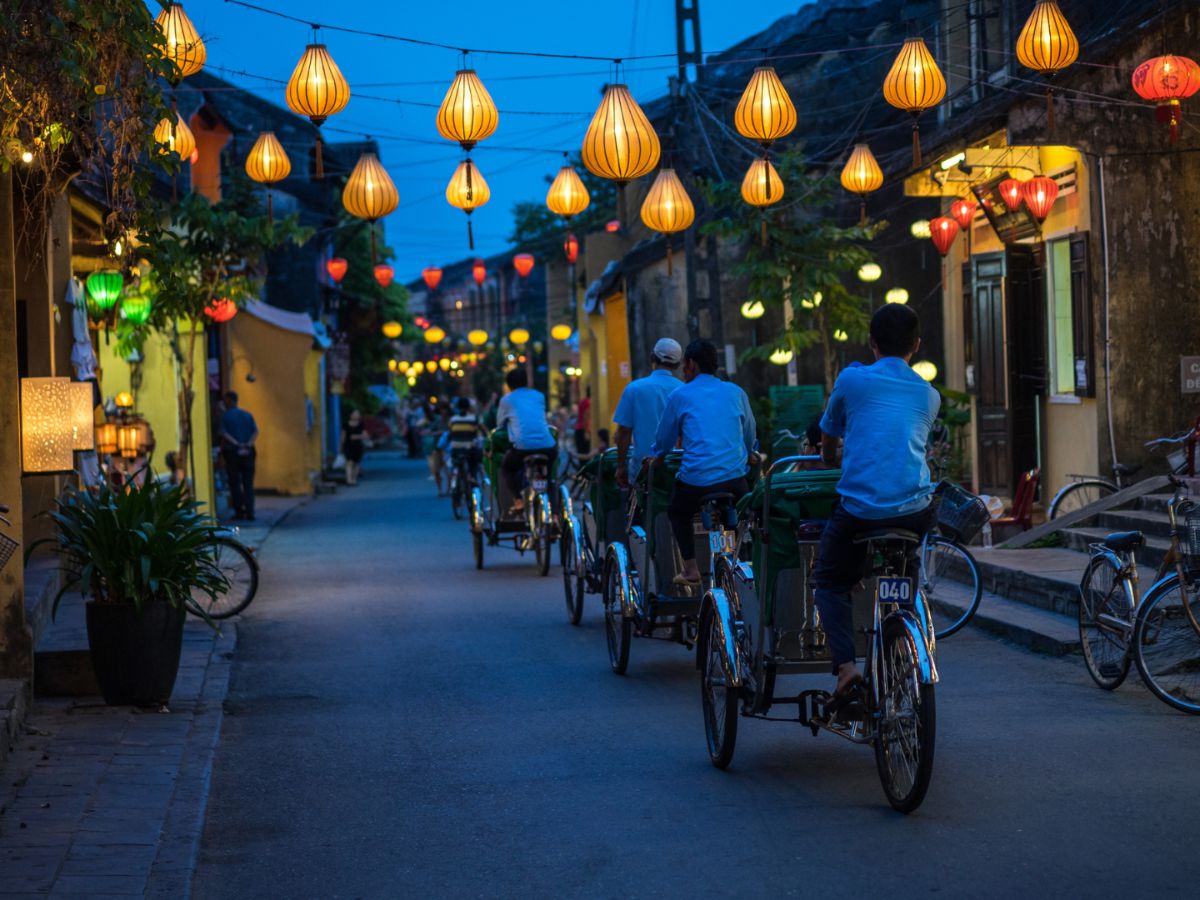
Hoi An lanterns are displayed in many places and have become a characteristic beauty of the ancient town. (Source: Collected)
Despite many historical fluctuations, the lantern-making craft is still preserved and passed down by generations of Hoi An artisans. Especially, from the late 20th century, when Hoi An became a prominent tourist destination and was recognized by UNESCO as a World Cultural Heritage, the lantern-making craft entered a phase of strong recovery and development. Craftsmen not only maintain traditional techniques but also improve designs, notably the foldable lantern design. This also helps the product be more suitable for tourism and export needs. To date, the Hoi An lantern-making village is no longer limited to a fixed area but is scattered throughout the ancient town, with dozens of production workshops and hundreds of craft households.
1.2. Cultural and historical significance of the craft village
During the flourishing period of Hoi An trading port in the 17th century, lanterns were not merely lighting devices but also used as signboards for shops and assembly halls of Vietnamese, Chinese, and Japanese communities. The custom of hanging lanterns during festivals, holidays, and important events gradually became a popular way of life for the people here. The Hoi An lantern-making village has become a symbol of the blend of Vietnamese, Chinese, and Japanese cultures at this crossroads. The bamboo frame and design are influenced by East Asian lantern styles. The patterns, colors, and fabric covering reflect the aesthetic and philosophy of the Quang people. The transformation process over centuries has helped Hoi An artisans create a lantern style that is soft, rustic, yet sharp and familiar.
Today, lanterns are an indispensable brand image of the World Cultural Heritage – Hoi An Ancient Town. The local lantern-making craft is passed down through generations, contributing to preserving handicraft essences like bamboo processing, fabric covering, and hand-painting, despite the changes of urbanization. Sightseeing tours, experience classes, and the ancient town nights are truly highlights that attract tourists, while also providing a stable income for many families.
In many East Asian countries, lanterns symbolize light, representing wealth, reunion, and luck, so they are often hung during Tet, Mid-Autumn Festival, or important days. Colors also carry specific messages. Red symbolizes prosperity and luck, yellow represents abundance, green emphasizes peace, and cream white signifies purity. Many tourists share that whenever they bring a lantern home, they feel like they are keeping a piece of Hoi An with the feeling of peace by the Hoai River.
1.3. Scale and space of the Hoi An lantern-making village
Unlike many traditional craft villages concentrated in a specific location, the Hoi An lantern-making craft is widespread throughout the ancient town and its surrounding areas. Production workshops and lantern shops appear on many streets such as Nguyen Thai Hoc, Tran Phu, Le Loi, Bach Dang, the Nguyen Hoang night market area, or even in suburban areas.
This distribution helps connect production, display, product introduction, and tourism experiences within a unified space. Tourists can simply stroll through the ancient streets to admire, observe the lantern-making process, and even experience it themselves. Many traditional lantern workshops open their doors to visitors, some offering free entry or charging a small fee, combined with product sales and hands-on classes. There is usually an area displaying diverse models, an area for artisans to craft, and tables, chairs, and materials for customers to try making lanterns themselves.
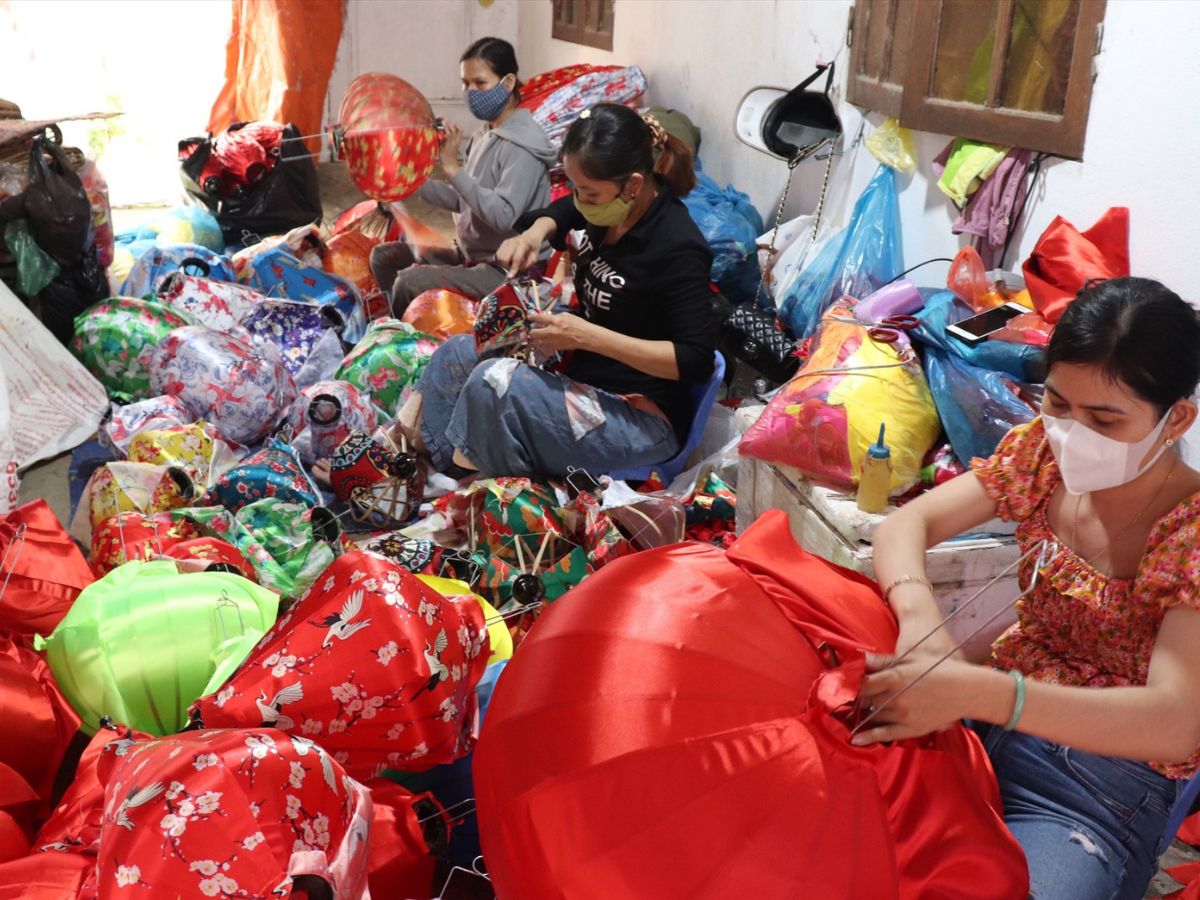
In Hoi An, there are many lantern production facilities with diverse designs and colors upon request. (Source: Collected)
The peak season for lanterns usually falls during the Lunar New Year due to increased decoration demand, the Mid-Autumn Festival, and the vibrant tourist season in February - April and July - August. On the 14th night of each lunar month, the "Full Moon Night in the Ancient Town" program and lantern festivals with thousands of lanterns hung along the Hoai River create an impressive cultural space.
1.4. Why tourists should visit Hoi An lantern making villages
When visiting the Hoi An lantern making villages, tourists can not only admire the shimmering lanterns on the streets but also witness firsthand the process from bamboo treatment, frame creation, fabric covering to pattern drawing. At the same time, this is also an opportunity to better feel the dexterity and meticulousness of the artisans. By participating in a workshop, you will personally bend bamboo, glue fabric, choose colors, and draw simple patterns, thereby understanding more about the aesthetic thinking and carefulness of Vietnamese handicraft.
The lanterns made by yourself or personalized by artisans with names or special patterns hold great souvenir value, serving as meaningful gifts associated with the trip. Visiting, shopping, and participating in experiential activities also contribute to preserving the livelihoods of lantern artisans, helping the traditional craft continue to develop sustainably.
Production workshops are often colorfully decorated, creating an ideal space for souvenir photos. This photo-taking experience is suitable for many subjects, from families to groups of friends, couples, and international tourists. It is also a place to relax and rest between a packed schedule of exploring the ancient town.
2. Ideal time to visit the lantern village
Choosing the right time will help tourists have the most complete experience when exploring the Hoi An lantern making villages. Seasonally, February - April is the ideal time with cool weather, little rain, convenient for walking and taking photos. July - August is also a good choice when the tourist season is vibrant, the ancient town is lively with many cultural programs and bustling lantern nights.
In terms of time of day, the morning from 8 AM - 11 AM is suitable for visiting workshops as artisans start working then, and the natural light is good for observing and photographing the lantern making process. The afternoon from 2 PM - 5 PM is suitable for lantern making workshops, after which you can head to the ancient town to admire the lanterns in the evening. The evening from 6 PM - 9 PM is when the ancient town is brightly lit with lanterns, the night market is bustling, suitable for check-in photos and shopping.
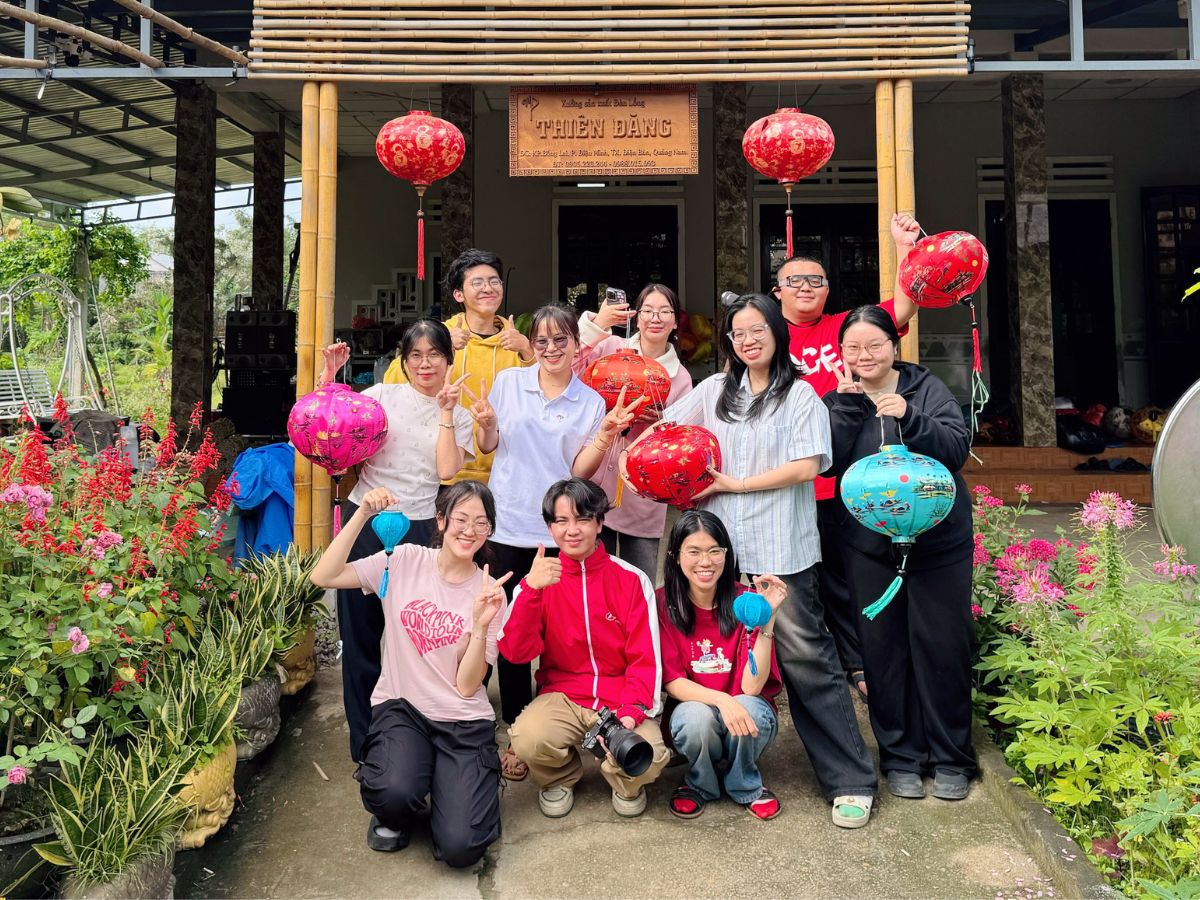
Visitors should choose the right time to visit Hoi An lantern-making workshops to have the most comfortable exploration experience. (Source: Collected)
Especially, the 14th day of the lunar month every month with the program "Old Town Full Moon Night" when the old town dims its electric lights, leaving only the glow of lanterns and candlelit flower lanterns on the Hoai River, is the most beautiful time to feel the soul of Hoi An lanterns. During the Lunar New Year and Mid-Autumn Festival, the quantity and types of lanterns on the streets and at the workshops are very abundant with a bustling festive atmosphere.
3. How to get to Hoi An Lantern Making Village
To visit the Hoi An lantern making village, visitors need to travel to Hoi An, as the lantern making craft is not concentrated in a separate village but is scattered throughout the ancient town and surrounding areas. Hoi An currently has no airport, so the most convenient option is to fly to Da Nang International Airport, located about 30 km from Hoi An center. From Da Nang airport, visitors can choose a taxi, ride-hailing motorbike, shuttle bus, or intercity bus to continue traveling to Hoi An, with an average travel time of 40 to 60 minutes. Alternatively, train is also a suitable option as visitors can get off at Da Nang station or Tam Ky station and then continue by taxi or bus to Hoi An. For visitors in the Central region, intercity buses or personal vehicles make accessing the Hoi An lantern making village more flexible and proactive.
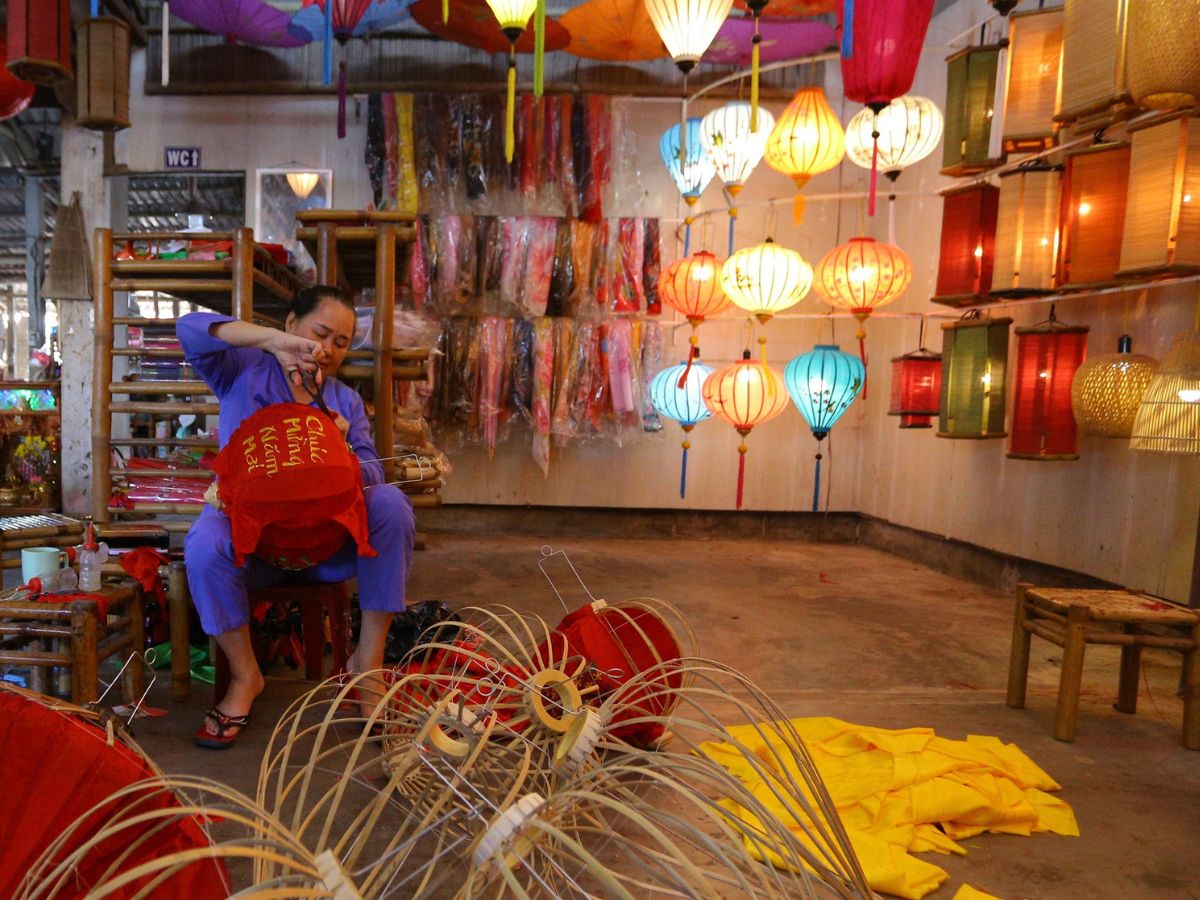
Hoi An lantern production workshops are located in many places within the ancient town and surrounding areas, so travel requires careful research before going. (Source: Collected)
Once in the center of Hoi An, moving to the production workshops and lantern experience points mainly takes place within the ancient town area. This is a heritage space with many pedestrian streets regulated by time slots, so walking or renting a bicycle is the most suitable way to get around. This method helps tourists easily visit the lantern workshops, observe the handicraft process, and combine it with taking photos in the ancient setting. Some streets concentrating many traditional lantern making establishments include Nguyen Thai Hoc, Phan Chu Trinh, Tran Nhan Tong, and the area along the Hoai River.
If traveling with the elderly or carrying many items, electric vehicles and small taxis operating around the ancient town are convenient options. Choosing the right means of transport not only saves time but also provides a complete experience when exploring the Hoi An lantern making village, which is closely linked to the rhythm of life and the unique cultural space of the ancient town.
4. Traditional Handmade Lantern Making Process in Hoi An
The art of creating exquisite lanterns at the Hoi An lantern making village requires skill and patience through each stage. The traditional handmade lantern making process includes three main stages: preparing materials, creating the frame and covering it with fabric, and finishing with hand-painted decorations.
4.1. Characteristic Materials of the Hoi An Lantern Making Village
The bamboo used for making lanterns must be old, solid, and fresh bamboo, carefully selected for durability, flexibility, and resistance to warping. After harvesting, the bamboo is soaked in salt water for about 10 days to prevent termites, increase durability, and limit surface cracking. The soaked bamboo is then dried in the sun and split into small strips. In this stage, the craftsman's skill is crucial to ensure the bamboo strips are both strong and flexible.
The fabric covering the lantern preferably uses silk or satin, which are soft and elastic materials. When wrapped around the bamboo frame, they do not tear or wrinkle. Silk also creates a soft light effect; when the lantern is lit, it emits a warm, smooth yellow light, making it a popular choice for many tourists.
The wooden rings used to hold the two ends of the lantern frame must be evenly turned, ensuring they match each lantern model. The bamboo strips are connected to the wooden rings with nylon strings to create a frame that can be conveniently folded or unfolded. The lantern's tassel is made of synthetic silk attached with a wooden bead to serve as a hanging point and keep the lantern balanced.
4.2. Traditional Lantern Production Stages
Once the bamboo is carefully treated and dried, the artisan begins splitting it into strips of appropriate length and size for the desired lantern model. Then, the bamboo strips are rounded evenly and smoothed to ensure durability and ease of fabric application. Each strip is fixed to the two wooden rings using glue and string. The strips are connected with nylon strings to form a frame that can be folded or unfolded. At this step, the craftsman uses their hands to adjust, ensuring the strips are evenly spaced and the lantern shape is correct.
Silk or satin fabric is cut into pieces depending on the number of bamboo strips and the type of lantern. The artisan applies glue to the bamboo strips and then adheres the fabric, wrapping it closely along the curves of the frame. This step requires meticulousness as the fabric must be stretched evenly, without wrinkles or folds. After gluing, the fabric edges are trimmed neatly, and the seams are adjusted to be flat and beautiful.
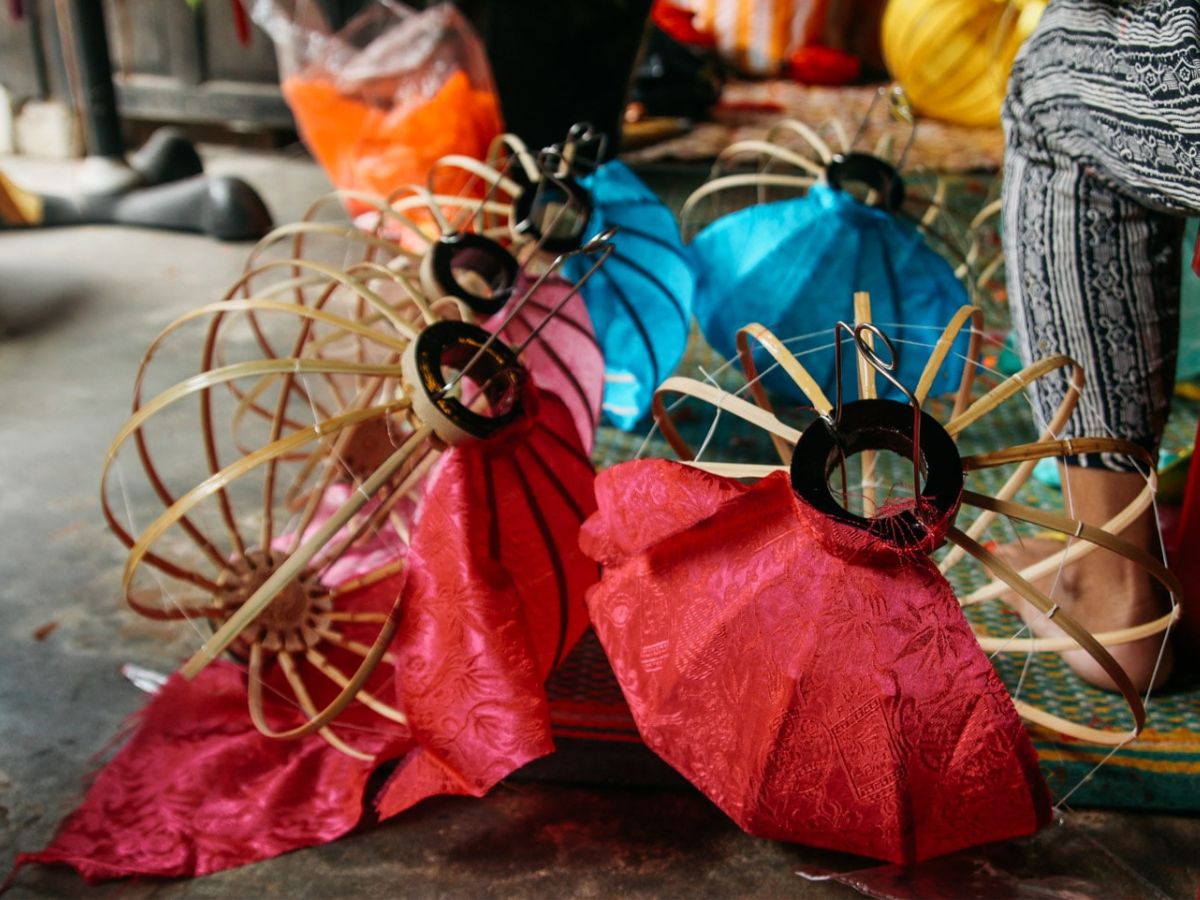
The process of making Hoi An lanterns requires meticulousness and skill from the artisans of the craft village. (Source: Collected)
The finishing step is the stage where artisans use brushes to directly paint characteristic motifs onto the fabric, such as Hoi An landscapes, Hoai River, Japanese Bridge, lotus flowers, bamboo, apricot blossoms, cranes, or calligraphy. Many places also offer product personalization by writing customer names, wishes, or messages upon request. To complete an elaborately hand-painted lantern, it usually takes about 3-4 days, with the painting and decorating alone taking up to 3 days.
4.3. Diverse Designs and Styles of Hoi An Lanterns
At the Hoi An lantern-making village, visitors will find many lantern models with diverse styles such as round lanterns, octagonal lanterns, hexagonal lanterns, gourd shapes, garlic shapes, barrel shapes, papaya shapes, and pyramid shapes, as well as umbrella lanterns. Additionally, there are more creative designs like moving-picture lanterns, lotus flowers, dragons, carp, long cylinders, all crafted with skillful techniques.
Each style carries its own meaning associated with Eastern culture. Round lanterns symbolize completeness and reunion, suitable for festivals and family gatherings. Gourd, pumpkin, and garlic shapes are symbols of fortune and prosperity. Lotus lanterns represent purity and nobility, often used in pagodas or spiritual sites. Moving-picture lanterns and dragon shapes embody creativity and festive spirit, frequently appearing in major events or as decorative highlights.
5. Experiences at the Hoi An Lantern-Making Village
Experiences at the Hoi An lantern-making village help visitors gain a deeper understanding of the traditional handicraft here. Visitors can not only tour but also directly participate in the crafting process, thereby better understanding the culture and skills of local artisans.
5.1. Visiting Production Workshops
Many lantern establishments in Hoi An organize package experience tours that include visiting workshops, listening to explanations about the craft's history, observing artisans at work, and trying to make a lantern. Some hotels and resorts in Hoi An also invite artisans to organize workshops within their premises for resident guests.
Old workshops managed by traditional artisan families are highly regarded for their skillful craftsmanship and diverse designs. The simple workshop atmosphere offers many beautiful photo opportunities, and the friendly artisans are willing to explain the process to guests, creating an intimate experience.
Most workshops are open continuously from 8 AM to 9 PM, allowing visitors to drop in freely. Fees are only charged for participating in workshops or purchasing products. Workshops typically last 1-2 hours, with a reasonable fee that includes guidance, materials, and the finished product for guests to take home.
5.2. Hands-on Lantern Making Activities for Tourists
During workshops, tourists will receive a brief introduction to the history and various lantern styles. The bamboo frames are pre-prepared by artisans as this stage is quite time-consuming. Guests will unfold the frame, observe the structure of bamboo strips and wooden rings, and practice bending the strips and adjusting the frame under guidance to understand how to shape the lantern.
Tourists choose their preferred fabric colors and patterns, then work with artisans to attach the fabric to the frame, ensuring it is evenly stretched on the curved parts and carefully trimmed at the edges. Finally, guests can paint simple motifs or write names and wishes on the lantern with the artisan's assistance for more complex details. The finished lantern will have a socket installed, be tested for lighting, and then folded neatly for easy transport as a souvenir.
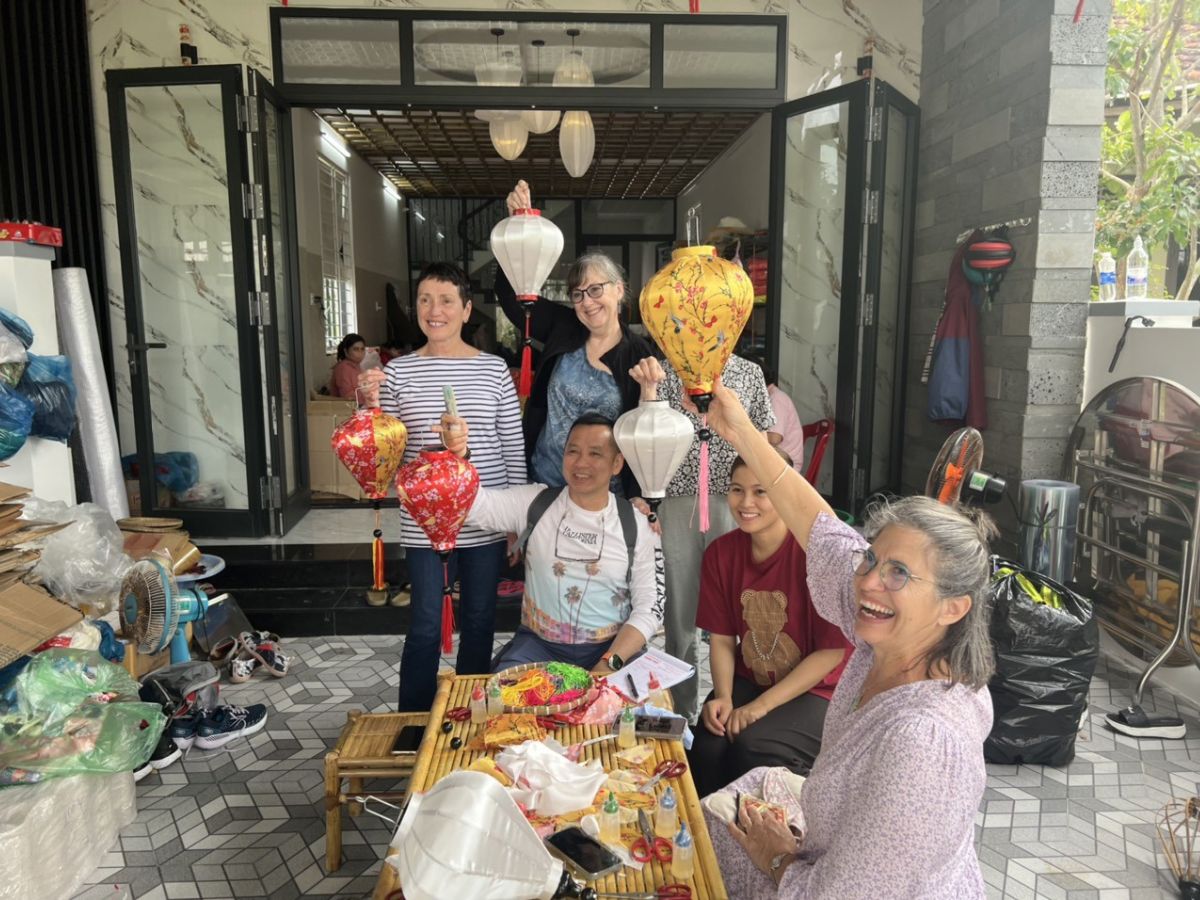
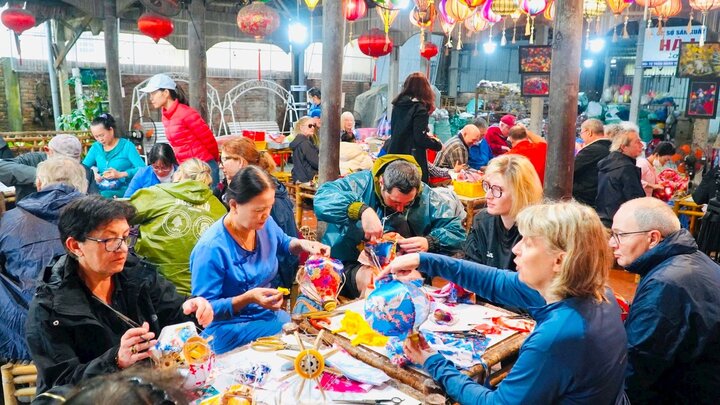
Tourists should not miss the experience of making lanterns when visiting the Hoi An lantern-making villages. (Source: Collected)
Children trying this activity will be trained in patience, meticulousness, and understanding of traditional culture. Families and groups of friends participating have the opportunity to bond, create shared products together, which is very suitable for sharing time away from technology. For international visitors, this is a deep cultural connection experience, not just observing but also immersing themselves in the life of the Hoi An people.
5.3. Shopping for Lanterns
Shopping for lanterns is one of the unmissable experiences when visiting the Hoi An lantern-making villages . This is not only an activity for buying souvenirs but also a way for tourists to get closer to the traditional cultural values of the ancient town. Lantern shops and production facilities are mainly located in the Hoi An ancient town area, especially along streets like Nguyen Thai Hoc, Phan Chu Trinh, Tran Nhan Tong, and the Hoai River. Here, tourists can easily find many handmade lantern models with diverse sizes, colors, and designs, from traditional round lanterns, hexagonal lanterns to stylized models with East Asian cultural motifs. Each lantern is handcrafted from old bamboo and silk fabric, reflecting the meticulousness and long-standing craftsmanship of local artisans.
The selling price of lanterns in the Hoi An lantern-making villages usually depends on the size, material, and sophistication of the product, so the prices are quite flexible and suitable for various needs. Tourists are encouraged to visit multiple shops to compare models and choose their preferred products. A special feature when shopping at traditional production facilities is that tourists can directly observe the lantern-making process, from the bamboo frame creation to fabric covering and motif finishing. This experience not only makes shopping more meaningful but also contributes to supporting the preservation and development of Hoi An's long-standing craft.
6. Suggested Itinerary for a Trip Combining Sightseeing and Experience in Hoi An Lantern-Making Villages
Arranging a reasonable itinerary helps tourists fully appreciate the beauty of the ancient town while having time to experience the culture with the Hoi An lantern-making villages . A 2-day, 1-night travel itinerary combining sightseeing and experiences in the craft villages is a suitable suggestion for tourists. On the first day, tourists should depart early to have plenty of time to explore Hoi An ancient town. The morning is the ideal time to wander through the ancient streets, visit the Japanese Covered Bridge, Tan Ky Old House, and enjoy local cuisine.
After that, the journey continues with an experience at the Hoi An lantern-making villages. Here, tourists learn about the history of the long-standing craft, observe the handmade lantern-making process, and directly participate in making lanterns under the guidance of artisans. This activity helps tourists better understand the traditional cultural values associated with the ancient town. In the afternoon, tourists can relax by the Hoai River, shop for souvenirs, or rest at the hotel. When night falls, Hoi An becomes magical with brilliant lantern light, offering an emotional experience of strolling through the streets and releasing flower lanterns.
On the second day, tourists travel from Hoi An to Da Nang to continue their journey. A prominent destination not to be missed is Sun World Ba Na Hills. Here, tourists can experience the cable car, visit the Golden Bridge, explore the French Village, and enjoy the year-round cool climate. Additionally, in this tourist area, there is a space rich in traditional Vietnamese culture at Tru Vu Tra Quan. Here, every corner is meticulously cared for and decorated, giving tourists the feeling of experiencing the old Tet holidays with lanterns, specialty stalls, Vietnamese kitchens, or calligraphy masters offering wishes at the beginning of the year.
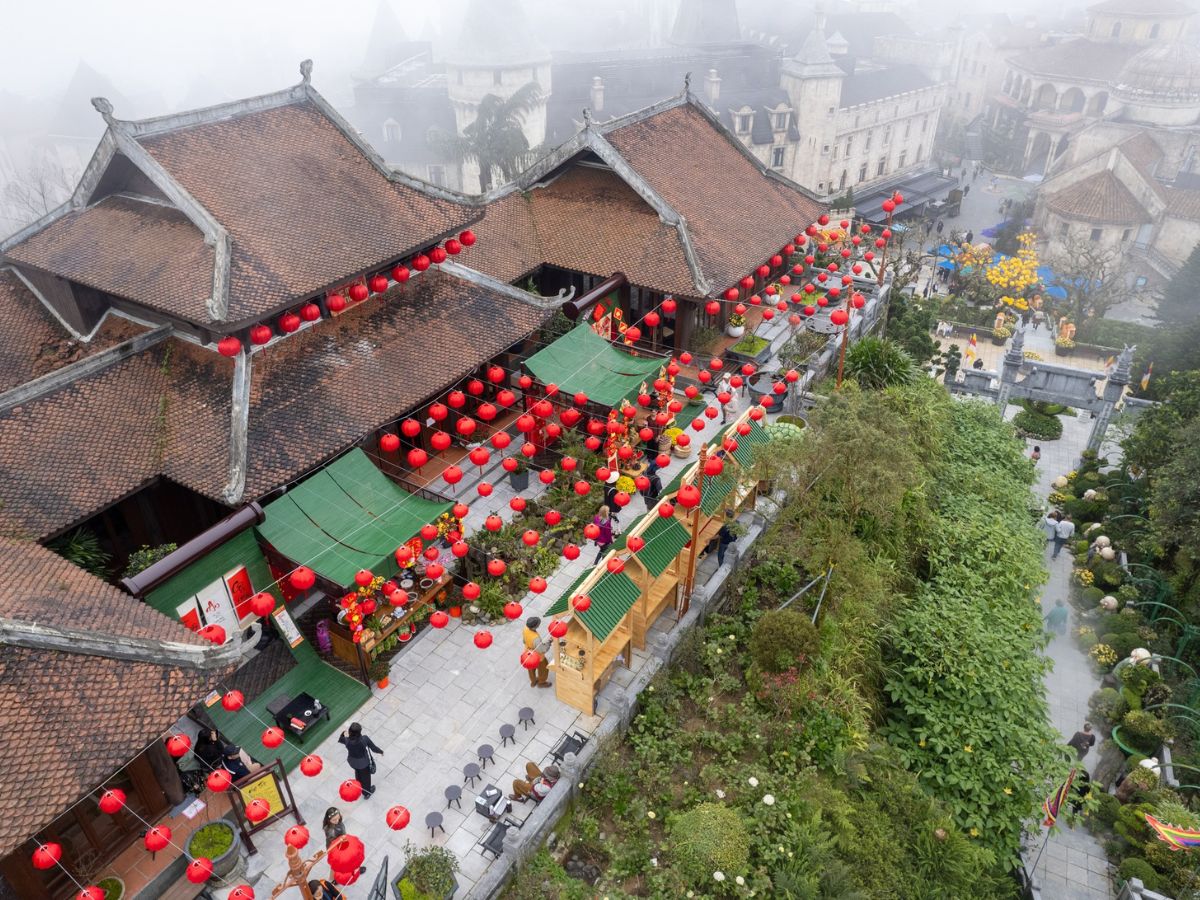
Sun World Ba Na Hills boasts a space imbued with Vietnamese tradition, featuring vibrant lanterns at Tru Vu Tra Quan. (Source: Collected)
After lunch at the tourist area, visitors can return to Da Nang city center, visit My Khe beach, or shop for local specialties before concluding their trip. This itinerary offers a balance between traditional cultural experiences and entertainment, making the trip complete.
7. Tips and Notes for Visiting Hoi An Lantern Making Village
A few small tips will help visitors have a smooth and fulfilling visit to the Hoi An lantern making village. Good preparation and understanding of local culture will lead to a memorable experience.
7.1. Notes on Photography and Respecting the Workspace
Visiting the Hoi An lantern making village is not just a tourist activity but also a journey to explore the deep culture of the ancient town. To ensure a complete and meaningful trip, visitors should prepare some important tips and notes in advance. Firstly, you should choose a suitable time to visit, prioritizing the morning or early afternoon to easily observe the lantern-making process and interact with artisans. Neat and polite attire will help you move conveniently within the craft village and show respect to the local people.
Besides, maintaining a gentle attitude and avoiding noise is essential as the lantern workshops are still in daily production. Visitors should follow the artisans' instructions when participating in experiences or workshops, especially in the stages involving bamboo frames and silk fabric. When shopping or taking photos, you should ask for permission beforehand to avoid disturbing the work of the craftspeople.
7.2. Tips for Shopping for Lanterns at the Craft Village
Shopping for lanterns is an indispensable experience when visiting the Hoi An lantern making village. Lanterns here are mainly made from old bamboo frames, bent entirely by hand, combined with silk or brocade fabric in various colors. The shapes are quite diverse, with the most popular being round lanterns, diamond-shaped lanterns, and garlic-shaped lanterns, suitable for both home decoration and as souvenirs. Visitors should prioritize buying lanterns at handicraft workshops or shops associated with the craft village to ensure the products are truly handmade and durable.
An important tip when shopping at the Hoi An lantern making village is to take time to compare prices at different shops before making a decision. Lantern prices typically range from about 50,000 to 500,000 VND depending on size, material, and finishing. Larger lanterns or custom-made ones will be more expensive.
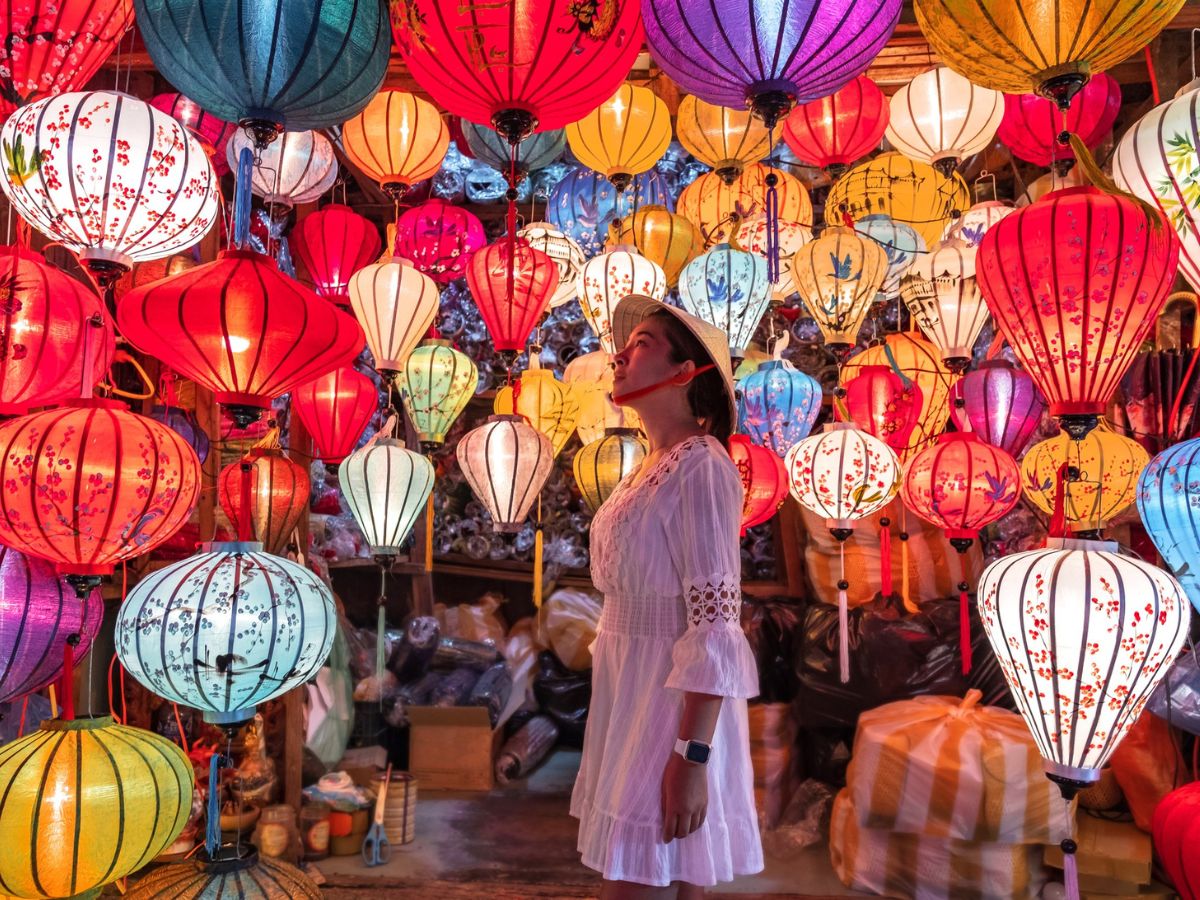
Visitors who wish to buy Hoi An lanterns as gifts should discuss the selling price and quality carefully. (Source: Collected)
Bargaining with sellers is quite common and considered a characteristic of shopping in Hoi An. However, visitors should negotiate gently and respect the artisans' efforts. Additionally, you should ask carefully about the lamps' ability to be folded for convenience when traveling long distances or by plane. These notes will help the shopping process go smoothly and provide a complete experience when exploring the traditional craft village.
7.3. Safety and Cultural Etiquette Notes When Visiting Traditional Craft Villages
When entering workshops, pay attention to the work areas with sharp objects such as knives, scissors, and hot glue. Supervise children and do not let them touch the tools. Backpacks or bags should be worn neatly to avoid bumping into lamp frames or lamps displayed on shelves. Maintain order, do not speak loudly, and do not smoke in areas with fabric, bamboo, and paint.
If you want to record videos or take close-up shots of artisans, ask for permission first and express your gratitude to show politeness. Keep the workshop and the ancient town clean by not littering food wrappers or water bottles. When participating in a workshop, tidy up your area after finishing to respect the organizers' efforts and the common space.
The Hoi An Lantern Making Village is an ideal destination for visitors who love traditional culture and exquisite handicrafts. It offers an intimate yet culturally rich experience, contributing to the unique charm of exploring the ancient town. Make time to visit, feel it for yourself, and capture memorable moments during your trip.