















1. Overview of Hoi An's Rainy Season
1.1. When does Hoi An's Rainy Season Occur?
Hoi An enters its rainy season from around August and lasts until February of the following year, with the period of heaviest rainfall usually occurring in October and November. This is the time directly affected by the Northeast monsoon, causing rainfall to increase significantly compared to the remaining months of the year.
According to meteorological statistics for the Central region, the average rainfall in Hoi An during the rainy season ranges from 2,000 mm to 2,500 mm per year, concentrated mainly in the last few months of the year. The rains often last for many hours, creating a unique weather characteristic for the ancient town during this period.
1.2. Weather Characteristics of Hoi An's Rainy Season
The weather in Hoi An during the rainy season has an average temperature of 22 to 26 degrees Celsius, significantly lower than in summer. The air is often cool in the early morning and evening, providing a comfortable feeling for tourists who enjoy strolling and sightseeing in a quiet atmosphere.
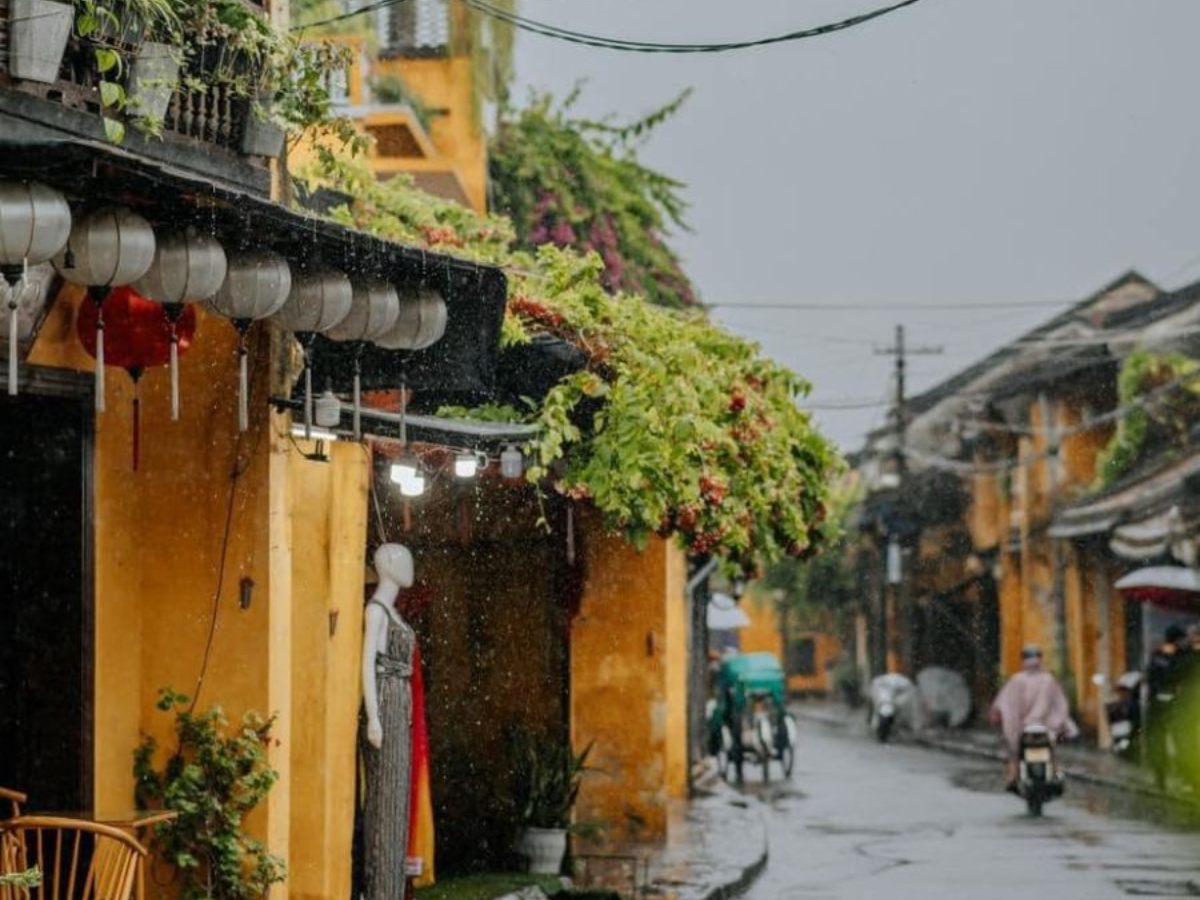
Hoi An's rainy season brings a sense of peace. (Source: Collected)
The air humidity during the rainy season is quite high, combined with drizzling rain, making the ancient town possess a more serene and ancient beauty.
1.3. Why should you travel to Hoi An during the rainy season?
Hoi An during the rainy season attracts tourists with its peaceful atmosphere and fewer crowds, suitable for those who want to experience the ancient town in a slow-paced way. Additionally, travel costs during the rainy season are often 20% to 40% lower than during the peak season, including accommodation prices and some tourist services. This makes Hoi An during the rainy season a suitable choice for budget-conscious travelers seeking a quality experience.
2. Unmissable Beauty and Experiences in Hoi An during the Rainy Season
2.1. Hoi An Ancient Town in the Rainy Season – Romantic and Peaceful
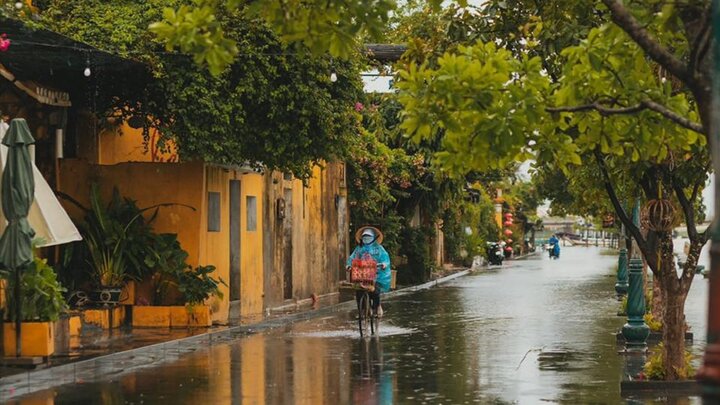
When the rain falls, Hoi An Ancient Town dons a tranquil beauty with moss-covered roofs, time-worn yellow walls, and water-streaked paths reflecting lantern light. The quiet atmosphere allows visitors to better feel the slow rhythm of life and the distinctive ancient charm of this heritage site.
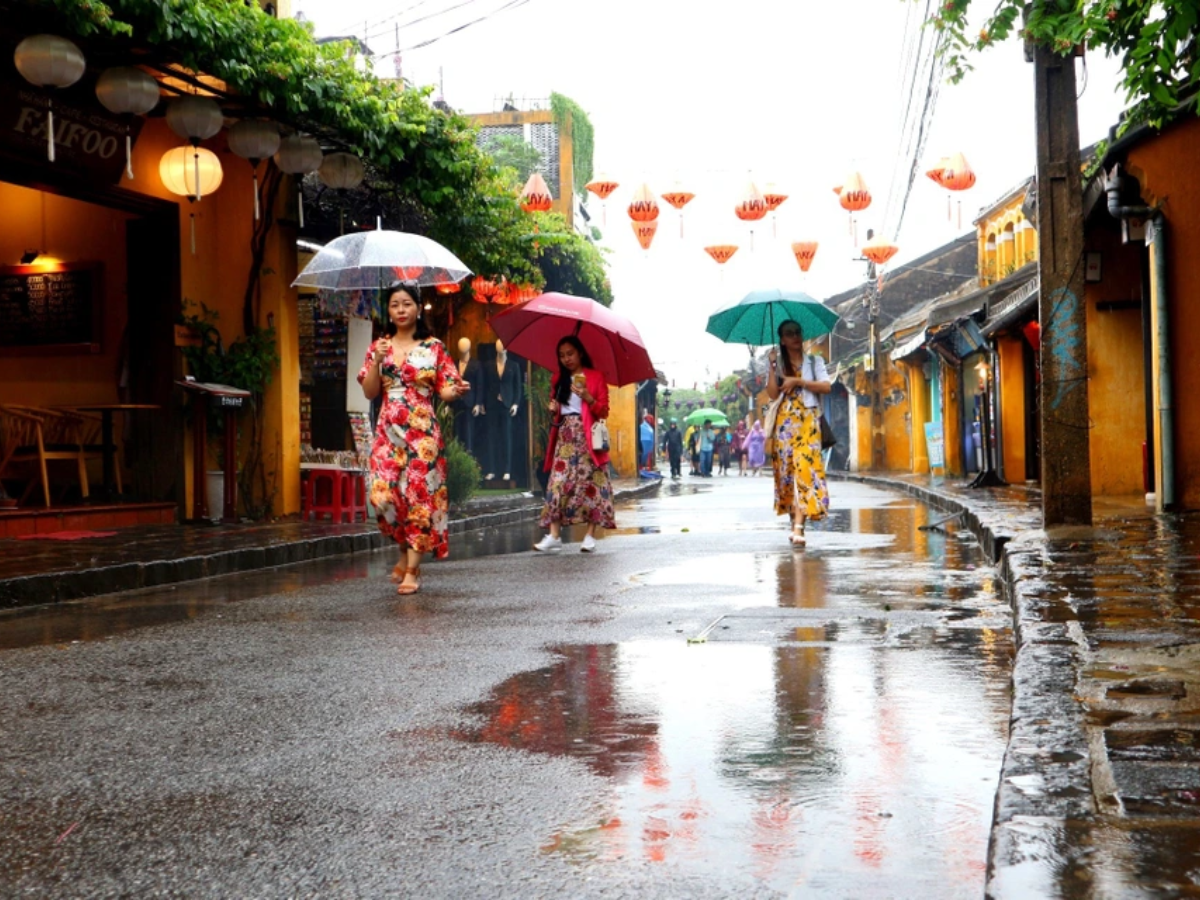
The wet street reflects the romantic lantern light. (Source: Collection)
The sharp decrease in visitors during the rainy season allows tourists to easily explore the central streets without crowds. This is also an ideal time to admire Hoi An from a different perspective, gentle, profound, and full of emotion.
Strolling under the light rain, holding an umbrella and leisurely walking through the ancient streets is an experience many tourists love. The wet street surface creates a reflection effect of the lantern light, making Hoi An's rainy season photos have a very unique color.
2.2. Visiting ancient houses, museums, and sheltered relics during the rainy season
On days with heavy rain, visiting ancient houses and museums in the ancient town is a suitable choice. Places like Tan Ky Ancient House, Phung Hung Ancient House, or the Museum of Folk Culture have indoor spaces, helping tourists avoid the rain and learn more about Hoi An's history.
The tranquil atmosphere of a rainy day further highlights the value of wooden architecture, carved details, and historical stories associated with each ancient house. This is a suitable experience for tourists who love culture and want to explore Hoi An in depth.
2.3. Enjoying characteristic rainy day cuisine in Hoi An
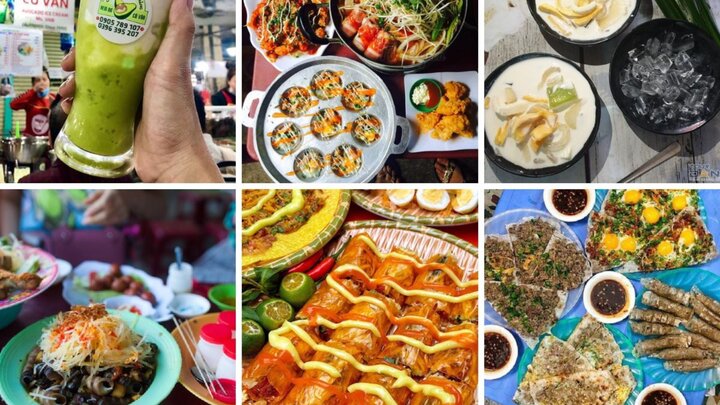
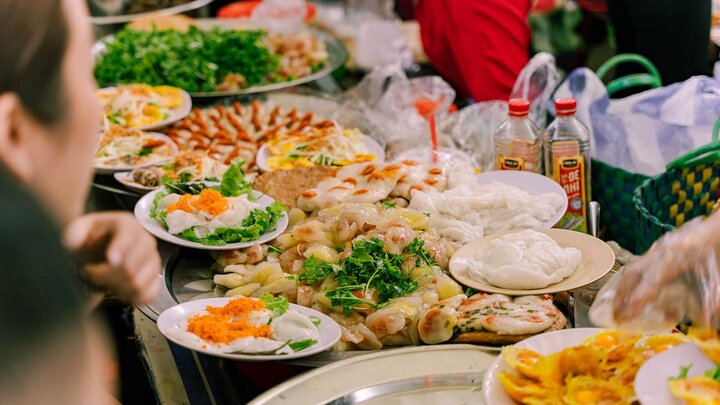
Hoi An in the rainy season is an ideal time to enjoy hot, flavorful dishes, helping the body warm up and clearly feel the essence of local cuisine. Cao lau is a dish chosen by many tourists, with chewy noodles, a less soupy but rich broth, combined with char siu pork and Tra Que herbs. On rainy days, cao lau is often served hot, creating a comfortable feeling when enjoyed in the quiet ancient town atmosphere.
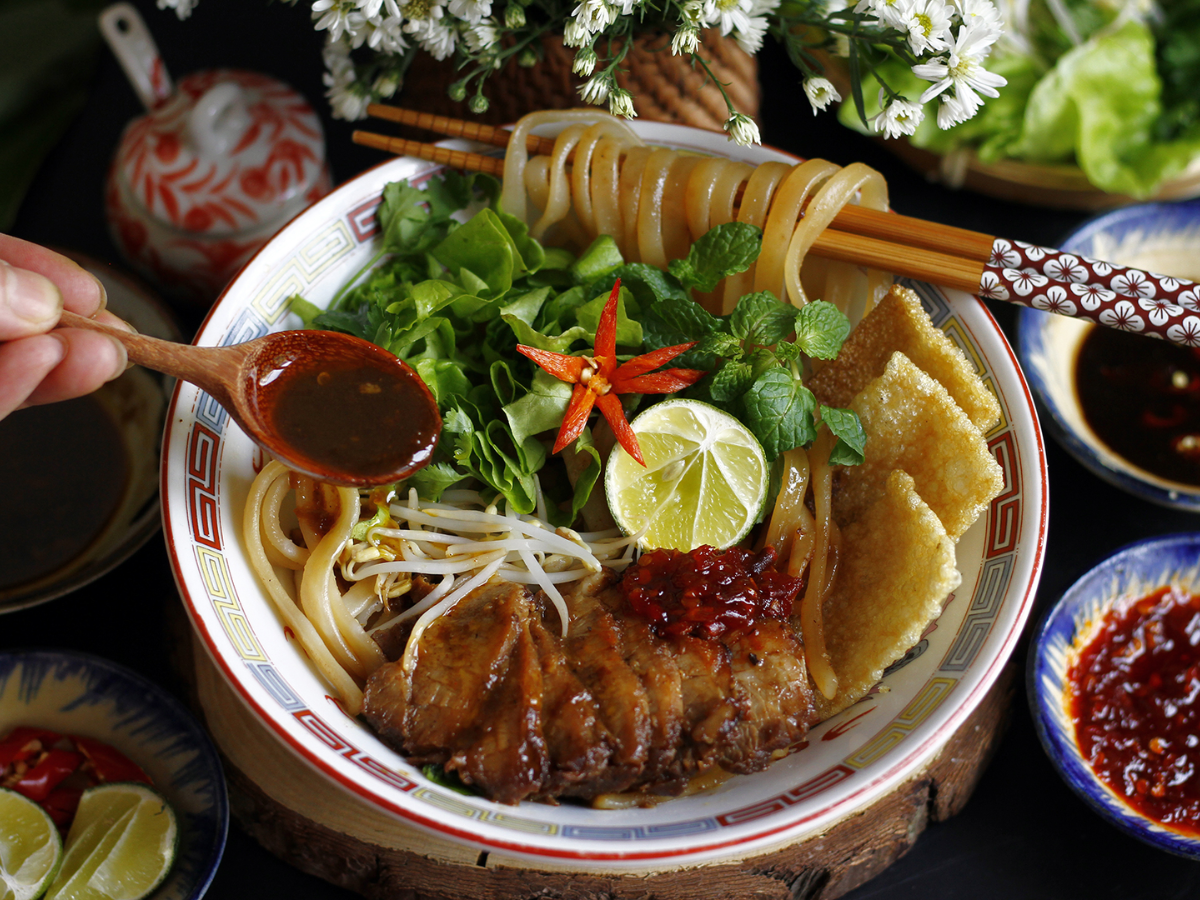
Enjoy Cao Lau, a famous dish in Hoi An. (Source: Collected)
Mi Quang is also a dish suitable for cold, rainy weather, with a light, savory broth and plenty of toppings such as chicken, shrimp, quail eggs, and grilled rice paper. Additionally, dishes like grilled pork rolled with wet rice paper (banh uot), banh dap, or hot clam porridge are often chosen by tourists on rainy evenings, making meals more flavorful and warm.
Besides savory dishes, coffee and hot sweet soups are also experiences not to be missed in Hoi An during the rainy season. Small cafes nestled in ancient houses, overlooking the rainy streets, offer a relaxing space, suitable for tourists to rest and enjoy the slow pace of life characteristic of the ancient town.
2.4. Art experiences, "indoor" workshops
The rainy season is a suitable time to participate in indoor activities, especially handicraft workshops that carry the cultural imprint of Hoi An. Tourists can experience making traditional lanterns, learning the process of creating the colorful lanterns that have become symbols of the ancient town.
Besides lantern making, workshops on painting traditional opera masks, pottery making, or learning traditional handicraft techniques are also organized year-round, especially suitable during rainy days.
3. Points to note and challenges when visiting Hoi An in the rainy season
3.1. Flooding in Hoi An during the rainy season
During heavy rain seasons, especially in peak months, some central areas of Hoi An ancient town may experience localized flooding. Streets like Bach Dang, Nguyen Thai Hoc, and the area along the Hoai River are often visibly affected when the river water level rises.
Flooding typically lasts from a few hours to 1 day, depending on rainfall and tides. Tourists should monitor weather information to proactively adjust their itineraries and avoid traveling during high water periods, which can make sightseeing difficult.
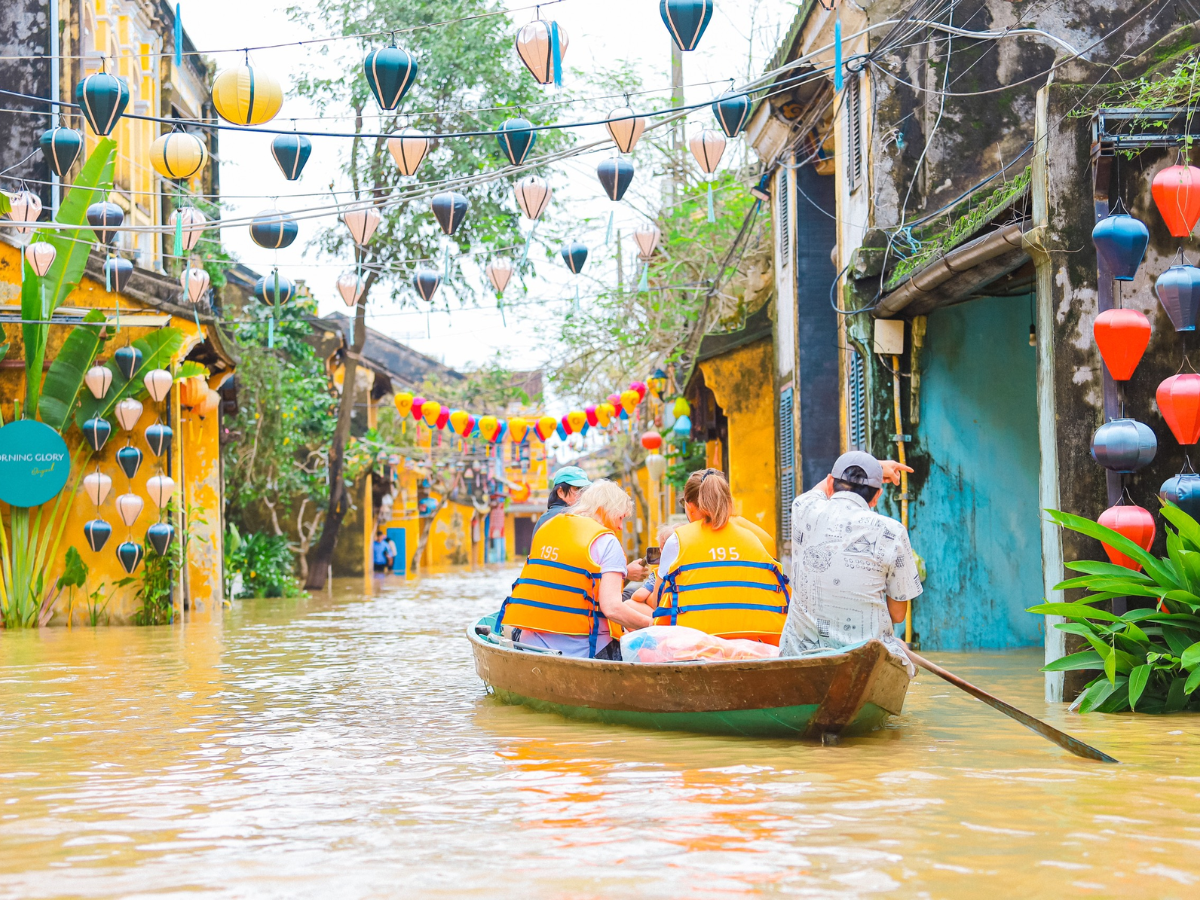
Hoi An flood season. (Source: Collected)
3.2. Tourist activities limited by weather
During the Hoi An rainy season, outdoor activities such as swimming at Cua Dai, An Bang beaches or visiting riverside craft villages are often not suitable during prolonged heavy rain. Traveling by boat or experiencing nature may also be restricted for safety reasons.
To ensure a complete experience, visitors should prioritize indoor attractions, museums, cafes, or art workshops. Flexible itinerary adjustments will help make the rainy season trip comfortable and safe.
3.3. Notes on safety, health protection, and disease prevention during the rainy season
The Hoi An rainy season has high humidity, easily leading to health issues such as colds or respiratory illnesses. Visitors should prepare windbreakers, non-slip shoes, and basic medications to ensure their health throughout the journey.
Limiting travel during heavy rain, choosing safe transportation, and following local guidance are important factors for a smooth rainy season trip.
4. Suggested itinerary for a 2D1N Hoi An rainy season experience
On the first morning, visitors can start by strolling around the ancient town, visiting old houses and museums when the weather is mild. Lunchtime is suitable for resting, participating in a lantern-making workshop, or enjoying local cuisine in an indoor setting.
The afternoon and evening are ideal times to explore Hoi An's cuisine, visit cafes, or take a walk to admire the ancient town lit up in the light rain. A flexible itinerary allows visitors to fully enjoy the romantic atmosphere of Hoi An in the rainy season.
If there is more time in the itinerary, visitors can spend a full day visiting Sun World Ba Na Hills. This resort is located at an altitude of about 1,487 m above sea level, has a cool climate year-round, and many large-scale indoor entertainment areas, allowing visitors to enjoy themselves even when the weather in Da Nang is rainy or foggy.

Visit the romantic French Village at Sun World Ba Na Hills.
5. Necessary preparations when traveling to Hoi An during the rainy season
5.1. Suitable clothing and accessories to bring
When traveling to Hoi An during the rainy season , tourists should prioritize lightweight, quick-drying clothing, combined with a raincoat or windbreaker. Non-slip footwear is an important item to help you move more safely on wet streets.
Accessories such as umbrellas, waterproof bags, and electronic device covers are also very necessary to protect personal belongings during prolonged rainy days.
5.2. Tips for taking beautiful photos in Hoi An on rainy days
The wet road surface creates a reflection effect of lanterns, which helps rainy season photos become impressive. Tourists should choose low angles, take advantage of natural light and small alleys to capture the characteristic moments of Hoi An in the rainy season.

Western tourists check in Hoi An during the rainy season. (Source: Collected)
Using transparent umbrellas or dark-colored outfits helps the overall photo harmonize with the ancient setting, creating a romantic and profound feeling.
Hoi An in the rainy season offers a different perspective, calm and emotional, suitable for those who love peace and deep cultural experiences. With careful preparation and a flexible itinerary, a rainy season trip is not only cost-effective but also leaves memorable impressions of a very unique, very slow, and very poetic Hoi An.