
















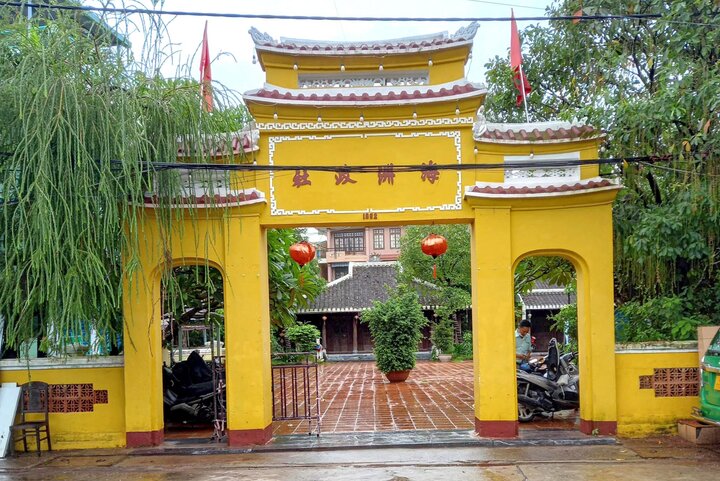
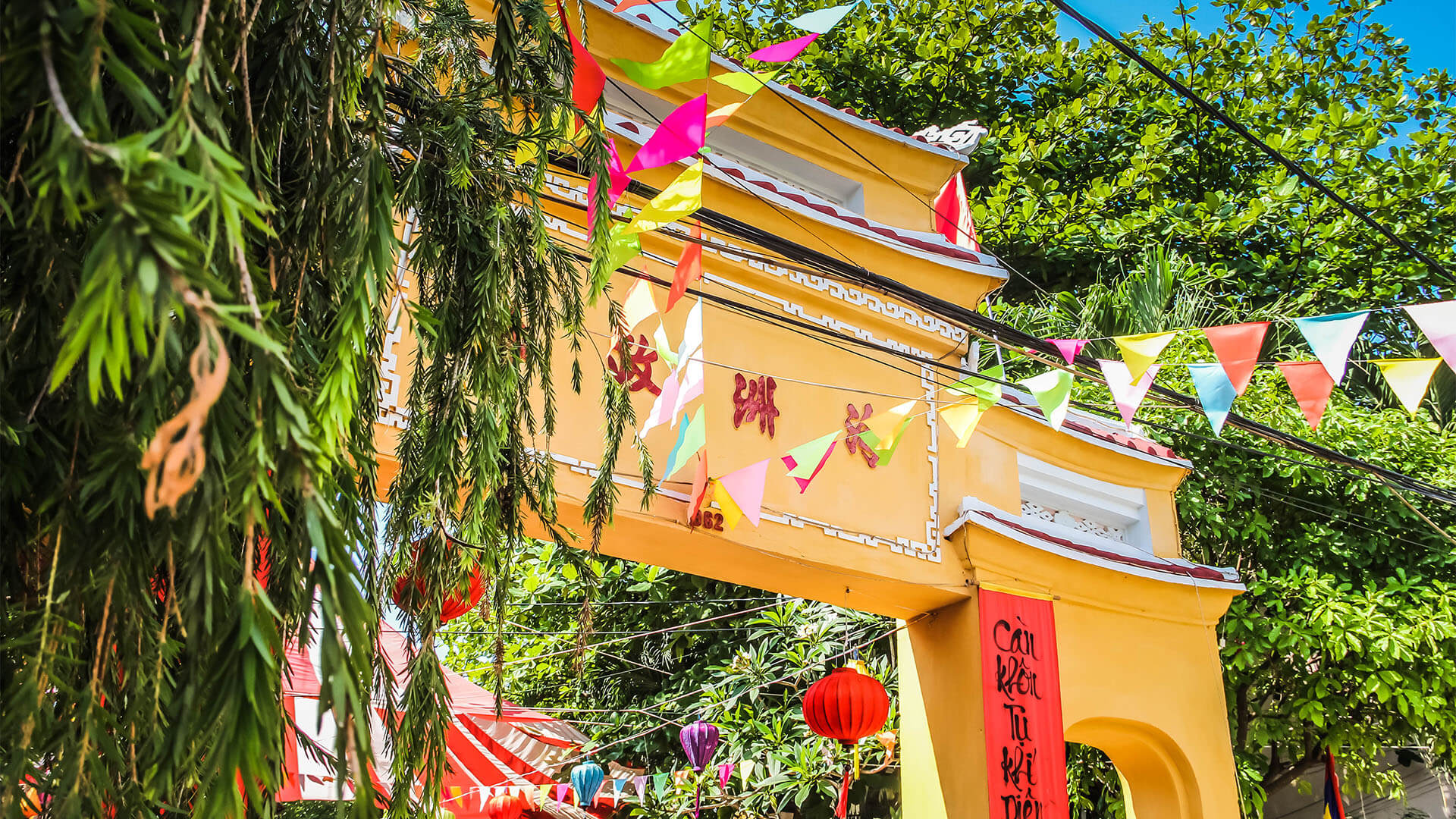
The Hai Chau village communal house was built in the 5th year of Gia Long (1806) at the Nghia Loi land area by the Han River. After many historical events, the communal house was moved and rebuilt in its current location in 1904. The communal house grounds cover an area of about 3,500 m², including structures such as the main communal house, the Temple of the Forefathers, the Temple of the 43 clans, and the Ba Temple. In front of the communal house is a rectangular pond with a rock garden and an ancient banyan tree, creating a peaceful scene. The architecture of the communal house is deeply traditional with yin-yang tiled roofs, intricately carved wooden pillars, and systems of lacquered and gilded horizontal boards and couplets. Notably, the communal house still preserves a bronze bell 1.3 m high and three marble steles inscribed with the village's history. In 2001, the Hai Chau village communal house was recognized as a National Historical and Cultural Relic. Since 2009, the village communal house festival has been held annually on the 10th day of the 3rd lunar month, coinciding with the Hung King's death anniversary, to honor the contributions of the ancestors and preserve local cultural traditions.