















1. General Introduction to Linh Ung Son Tra Pagoda
1.1. Natural Location and Special Spiritual Value of Linh Ung Son Tra Pagoda
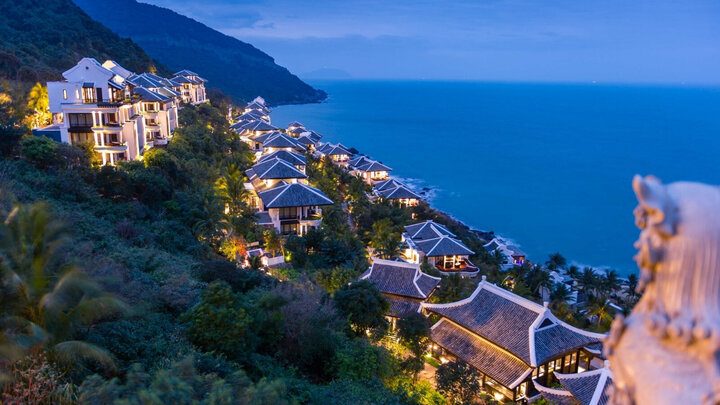
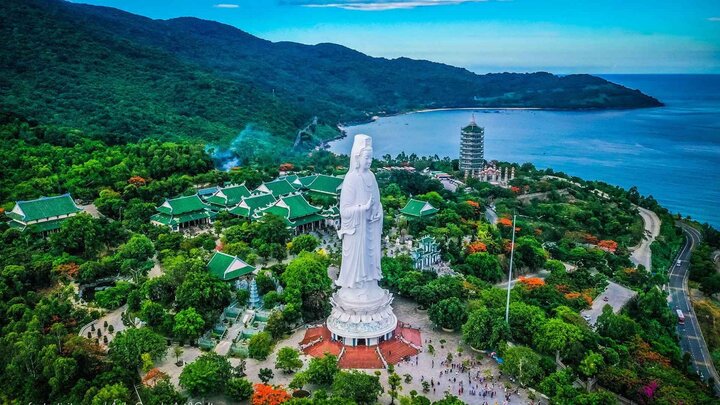
Located at Bai But on the Son Tra Peninsula, Linh Ung Son Tra Pagoda is about 10 km from the center of Da Nang city. The pagoda is situated on a large area of 12 to 20 hectares, with its back against Son Tra Mountain and facing the vast ocean in front. Behind it are the lush green Son Tra forests, while the front opens up to the immense Da Nang sea and the long Son Tra Bay.
From the grounds of Linh Ung Son Tra Pagoda, visitors can take in the panoramic view of Da Nang Bay, Son Tra Peninsula, My Khe Beach, Ngu Hanh Son, and the city center. The atmosphere here is always fresh and pleasant, thanks to the sea breeze mixed with the scent of the forest, bringing a sense of peace. These elements have created a special attraction, making Linh Ung Son Tra Pagoda one of the prominent spiritual tourism destinations in Central Vietnam, often described as a "Buddhist realm amidst the mortal world."
With a 67-meter-high statue of Quan The Am (Goddess of Mercy) and a grand architectural complex harmoniously blending traditional and modern styles, Linh Ung Son Tra Pagoda is currently the most famous pagoda in Da Nang. Its location within the Son Tra Peninsula tourist area allows visitors to easily combine visits to many attractive destinations, drawing a large number of pilgrims and tourists.
1.2. History and Legends of Linh Ung Son Tra Pagoda
Linh Ung Son Tra Pagoda was constructed starting on August 4, 2004 (June 19, Year of the Monkey) and officially completed nearly six years later on July 30, 2010 (June 19, Year of the Tiger). The pagoda covers an area of approximately 20 hectares and features many sections, including the main hall, ancestral house, monks' quarters, library, the Quan The Am statue, a stupa, and a set of Arhat statues. It is the largest and newest among the three Linh Ung pagodas in Da Nang.
Legend has it that during the reign of King Minh Mang (Nguyen Dynasty, 19th century), the people of Son Tra discovered a Buddha statue drifting ashore near the sea, its origin unknown. The locals considered it a good omen, built a small shrine to worship it, and regularly offered incense on the full moon and the first day of the lunar month, before setting out to sea to pray for peace and favorable winds.
From this story, the area became known as a sacred place, with calm seas and peaceful livelihoods for the people over a long period. The name Bai But also originated from the belief in a "Buddhist realm among humans," and later, Linh Ung Pagoda was built here. The story of the drifting statue and the peaceful sea has become a cultural and spiritual memory for the fishing community of Son Tra, forming the spiritual foundation for the pagoda today.
1.3. Overall Architecture
The architecture of Linh Ung Son Tra Pagoda is a unique blend of traditional Buddhist style and modern flair. The overall space of the pagoda is logically divided into many areas. Many sections feature curved tiled roofs with gracefully upturned eaves, decorated with dragons, phoenixes, or mythical creatures on the peaks, reflecting the traditional Vietnamese pagoda style. The Three-Gate Entrance (Tam Quan) and the main structures are roofed with turquoise or dark green glazed tiles, creating a gentle hue that stands out against the sky and sea. The large columns, bas-reliefs, and altars are all elaborately carved with images of dragons, lotuses, clouds, and foliage in the traditional sculptural style.
With its location backed by Son Tra Mountain and facing the East Sea, Linh Ung Son Tra Pagoda is a prime example of the "backed by mountain, facing water" principle in East Asian Feng Shui. The spacious courtyard in front of the pagoda slopes gently towards the hillside, overlooking the sea and the entire city, providing both openness and full exposure to sunlight, wind, and natural light. On either side of the courtyard stand rows of 18 Arhat statues carved from solid stone, likened to "guardian spirits" protecting the serene monastic space.
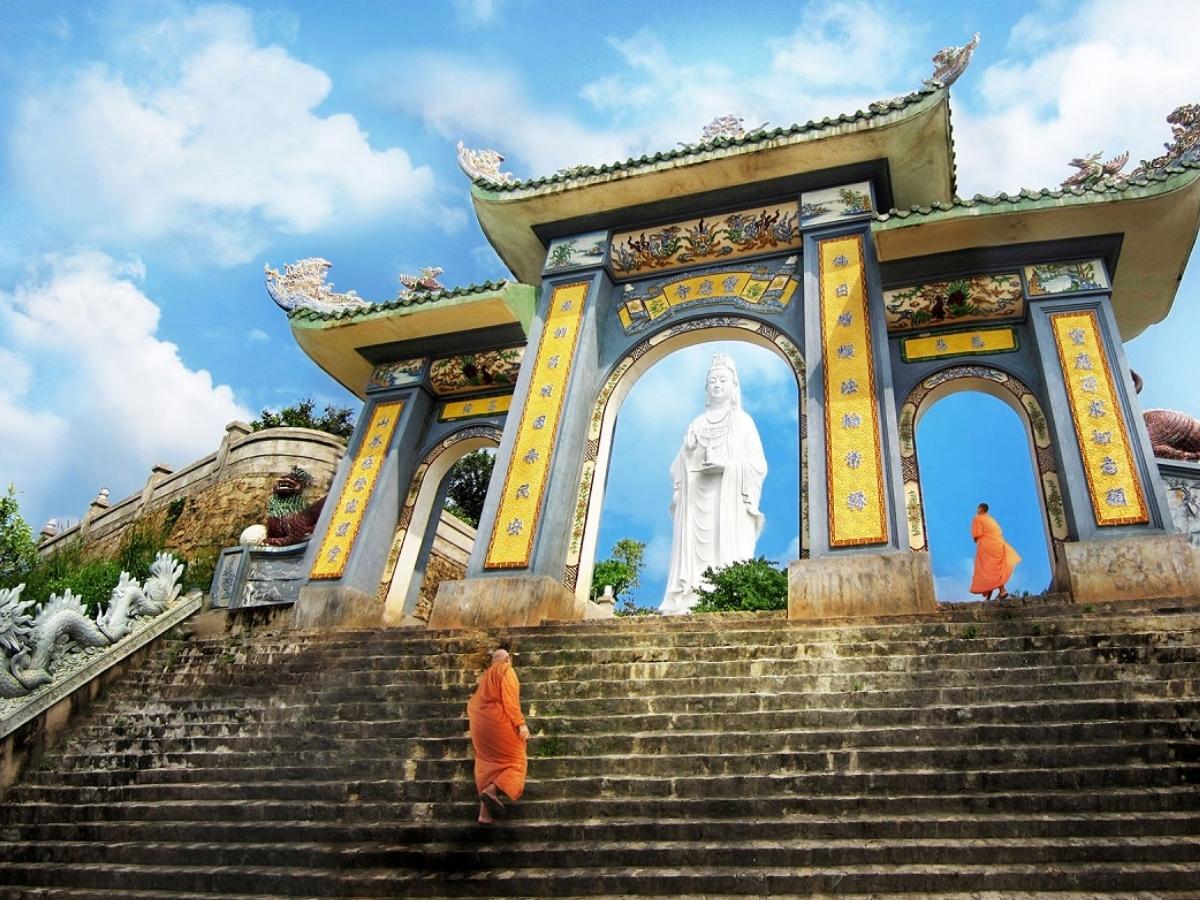
The architecture of Linh Ung Son Tra Pagoda is a unique blend of traditional Buddhist style and modern flair. (Source: Collected)
1.4. Information about the tallest Quan The Am statue in Vietnam
The statue of Quan The Am Bodhisattva at Linh Ung Son Tra Pagoda stands out with a height of 67 m, once recognized as the tallest Quan Am statue in Vietnam upon its completion. The statue stands on a large lotus pedestal with a diameter of about 35 m, creating a solid architectural highlight amidst the Son Tra mountain and sea landscape. The image of Quan The Am in a standing posture, hands in the Tam Muoi mudra, holding a vase of nectar, with a gentle gaze looking out towards the East Sea.
Inside the statue are 17 floors, each solemnly adorned with 21 Buddha statues in different forms and postures, embodying the meaning "Buddha within Buddha". The arrangement of multiple Buddha statues on each floor signifies that Buddha is present everywhere, spreading enlightenment wherever one goes. The placement of 21 Buddha statues on each floor is a rare and unique feature in large statue constructions in Vietnam.
The special aspect that makes the Quan Am Linh Ung Son Tra statue a symbol of art and faith is the combination of its grand scale and intricate details within. From afar, the silhouette of the Quan Am statue stands out as a protective emblem for the entire Da Nang coastline, creating a distinct visual identity for the seaside city.
1.5. Linh Ung Son Tra Pagoda within Da Nang's sacred triangle
In Da Nang, three pagodas share the name Linh Ung: Linh Ung Son Tra Pagoda, Linh Ung Ngu Hanh Son Pagoda (located within the Ngu Hanh Son scenic complex), and Linh Ung Ba Na Pagoda (part of the Ba Na Hills tourist area). These three pagodas form a "sacred triangle," like three firm spiritual pillars guarding important directions. Son Tra peninsula, Ngu Hanh Son mountains, and Ba Na mountains create a stable feng shui for the city.
Pilgrimage to all three Linh Ung pagodas is a meaningful experience for those who love spiritual tourism. Son Tra is notable for its location with mountains at its back and facing the sea, featuring the 67m Quan The Am statue; Ngu Hanh Son is an ancient pagoda amidst a limestone mountain complex with a system of caves; Ba Na is a pagoda atop a high mountain, perpetually shrouded in clouds. Linh Ung Son Tra Pagoda, with its largest scale and imposing Quan Am statue, is often the first stop on this exploration journey.
What makes Linh Ung Son Tra Pagoda particularly captivating for every return trip to Da Nang is the interplay between its grand Buddhist architecture, unique mountain and sea location, the legend of Bai But, and the Quan The Am statue that protects fishermen. These elements create a distinct value, affirming the pagoda's special position within the city's sacred triangle.
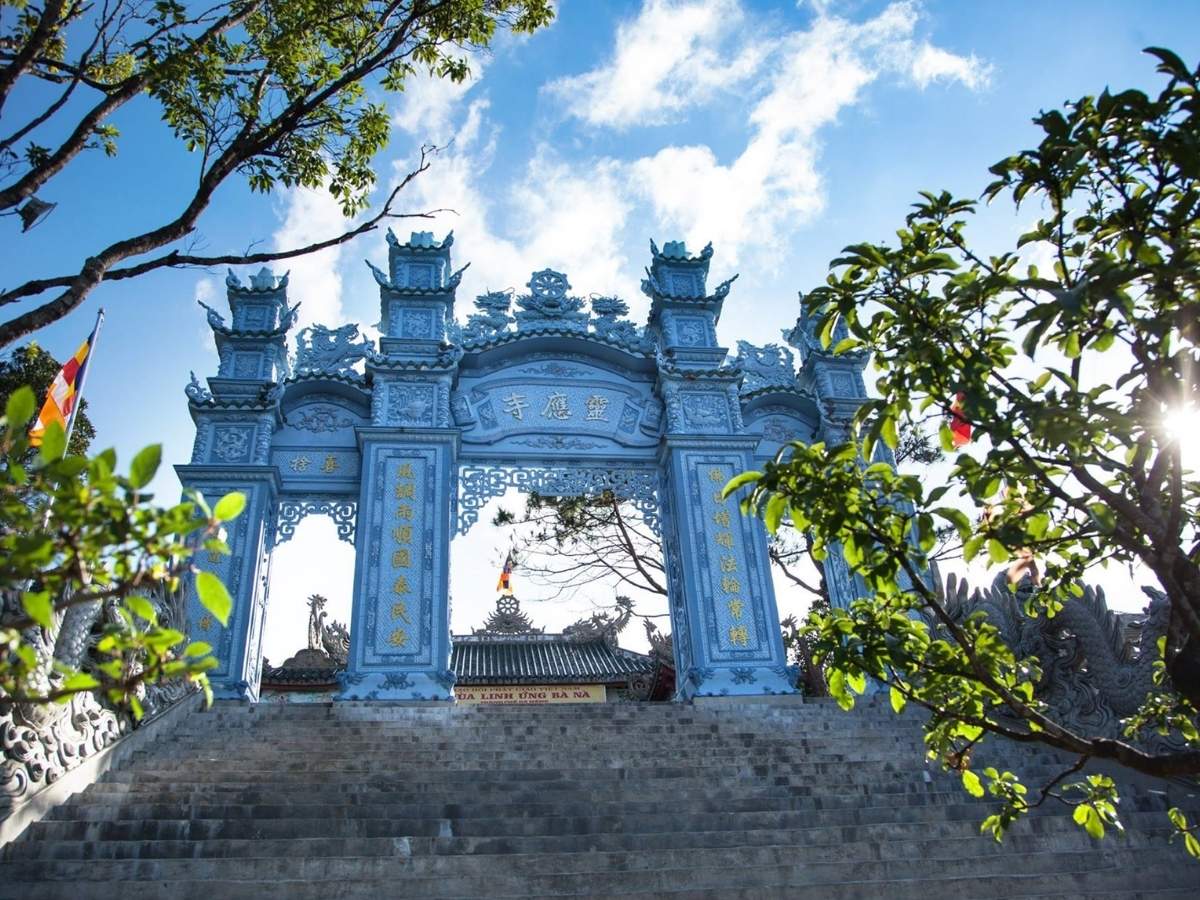
These three pagodas form a "sacred triangle", like three solid spiritual pillars guarding the important directions.
2. Directions to Linh Ung Son Tra Pagoda
2.1. Moving from Da Nang city center to Linh Ung Son Tra Pagoda
Getting to Linh Ung Son Tra Pagoda is quite easy with many transportation options. Starting from the city center, visitors can travel along Bach Dang – Tran Phu – 2/9 streets, crossing Song Han Bridge or Dragon Bridge. Then turn into Vo Van Kiet or Pham Van Dong street to My Khe beach. Continue along Vo Nguyen Giap – Hoang Sa street to the North, heading towards Son Tra peninsula, and you can always identify the Quan Am statue ahead to orient yourself.
For independent travelers, motorcycles and personal cars are the most popular choices due to the wide coastal road and parking available at the area below the pagoda entrance. Families or large groups can choose taxis, ride-hailing services, or tourist buses, as local drivers are familiar with the route to Son Tra peninsula. Additionally, many travel agencies in Da Nang also organize tours to Linh Ung Son Tra Pagoda with convenient shuttle bus services included in half-day or full-day programs.
The distance is about 10 km from the city center to the pagoda, and travel time by car or motorcycle is usually between 20 to 30 minutes depending on the starting point. Visitors should choose early morning hours (from 6 to 8 AM) or late afternoon near sunset to experience the cool air and enjoy the beautiful scenery of the sea and mountains in the softest light.
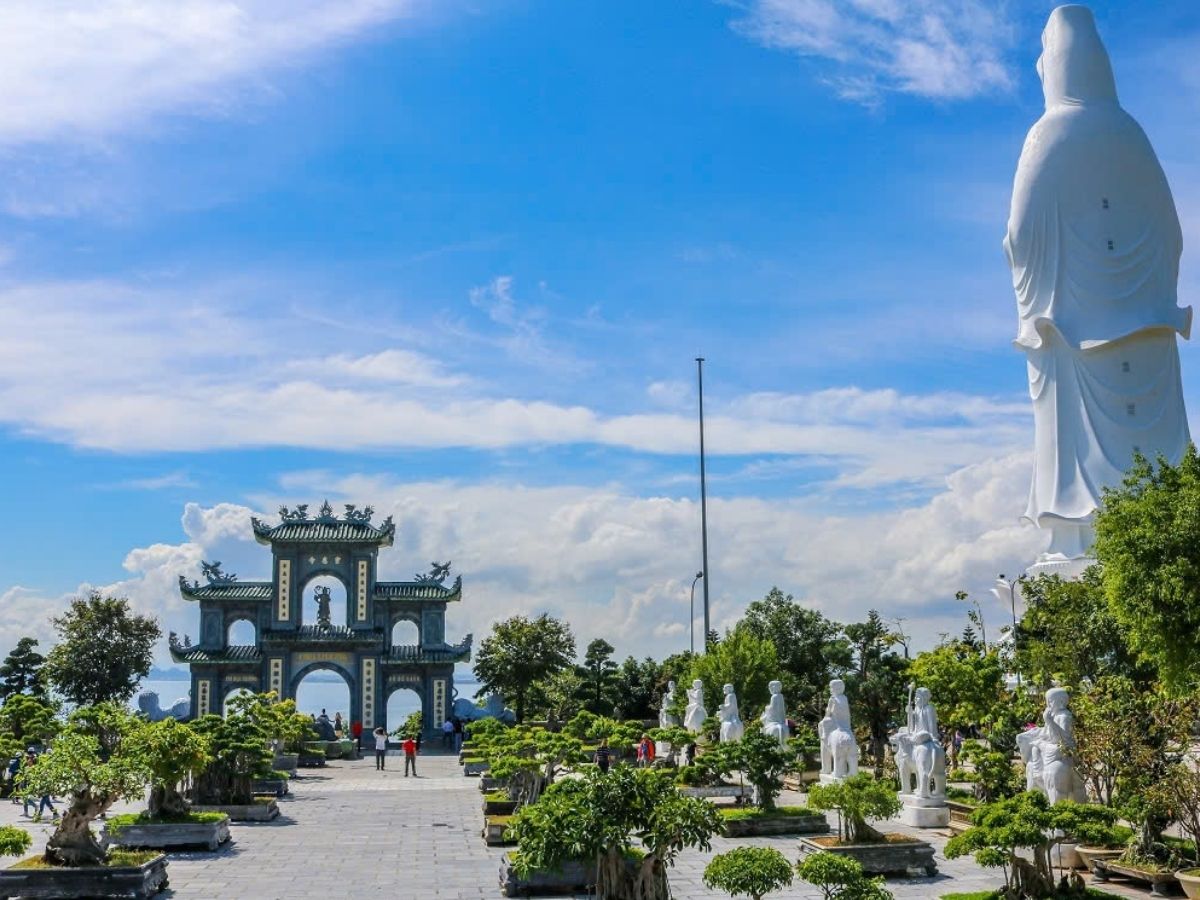
Getting to Linh Ung Son Tra Pagoda is quite easy with many transportation options. (Source: Compilation)
2.2. How to travel on Son Tra Peninsula when visiting the pagoda
From the coastal area and the pagoda entrance, the road leading up to Son Tra Peninsula is a paved road winding around the mountainside. It has slopes and many curved sections but is still convenient for both cars (from 4 to 45 seats) and motorbikes. Along the same route around the peninsula, there are many prominent attractions with clear signposts such as Ban Co Peak, the thousand-year-old banyan tree, Obama rock beach, and Son Tra lighthouse.
Ban Co Peak is a famous high point with a statue of an immortal playing chess overlooking Da Nang Bay, often visited by tourists after visiting Linh Ung Son Tra Pagoda. The thousand-year-old banyan tree, located deep within the peninsula, is an ancient tree with many aerial roots, considered a precious tree. Obama rock beach is a swimming area with large rock formations close to the shore, clear water, often a stop for visitors to take photos and swim.
On the roads of Son Tra Peninsula, due to many slopes and winding curves, visibility is sometimes limited, so it is necessary to travel at a moderate speed, staying in the correct lane and not overtaking carelessly, especially when using motorbikes. Visitors should check their brakes and fuel carefully before going up the mountain, bring drinking water and a jacket as some sections of the road are quite sparse. At the same time, comply with traffic signs, protect the forest environment, do not litter, and avoid feeding monkeys or wild animals freely to preserve a safe ecosystem for everyone.
3. The protective belief and its impact on the life of the Da Nang region
The statue of Quan The Am faces the East Sea, with a gentle gaze as if watching over and protecting the fishermen of Da Nang during their voyages through rough seas. From offshore, the image of the Quan Am statue appears as a spiritual landmark, a place where seafarers entrust their wishes for peace, praying for favorable winds and abundant catches.
The belief in the protection of the Quan Am Son Tra statue is deeply ingrained in the spiritual life of the fishing community and the people of Da Nang. Many families, whenever a relative goes to sea, visit Linh Ung Son Tra Pagoda to pray for safety, and after safe return trips, they come back to offer incense and express gratitude on major holidays.
Standing at the foot of the statue, many people share a feeling of awe at its majesty yet serenity. Many tourists feel a sense of peaceful energy, choosing to offer incense, chant Buddhist prayers, and entrust their wishes for health and peace for their families. The statue has also become a characteristic photographic symbol of Da Nang, visible from many locations in the city, creating a unique and unforgettable impression for the coastal city.
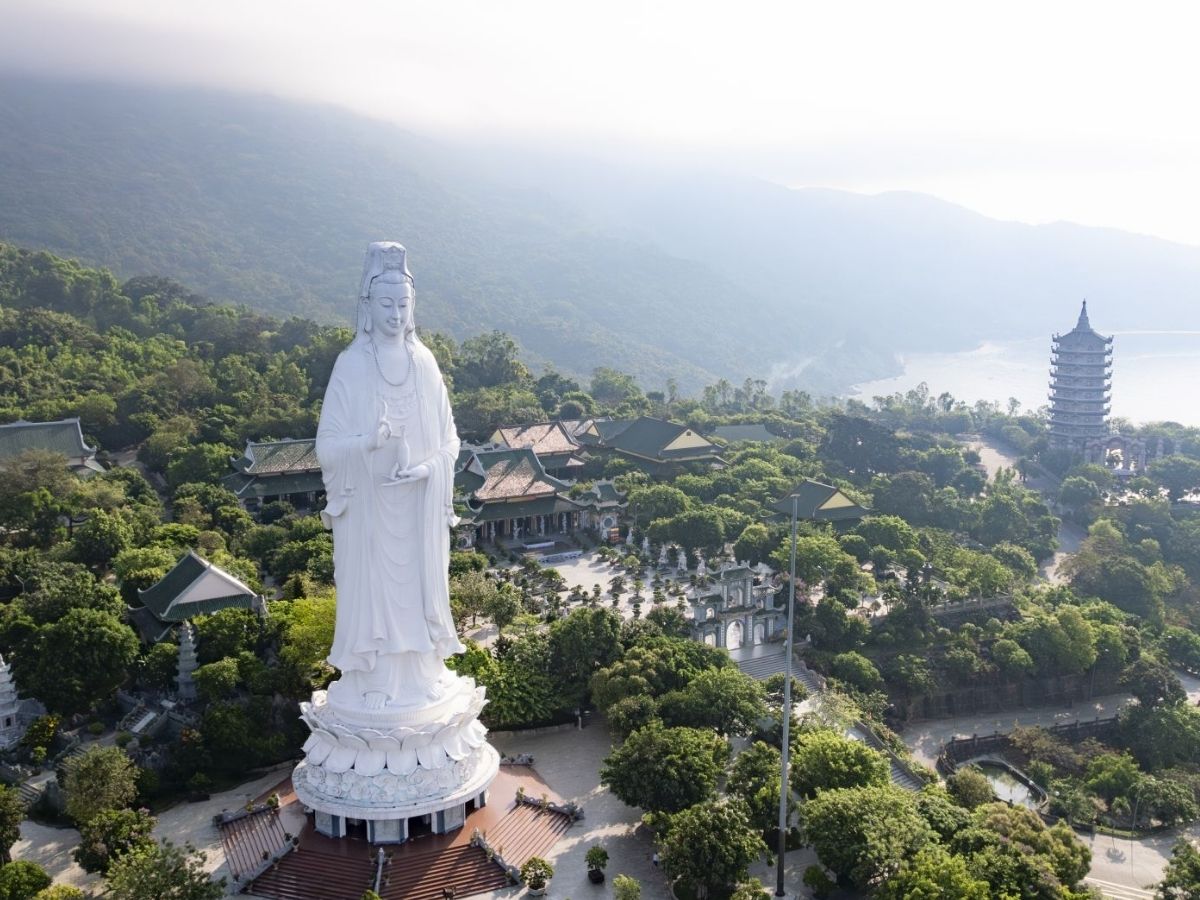
The statue of Quan The Am (Goddess of Mercy) faces the East Sea, her gentle gaze seeming to watch over and protect the fishermen of Da Nang. (Source: Collected)
4. Spiritual and Festival Tourism Experience at Linh Ung Son Tra Pagoda
4.1. Major Festival Activities and Local Experiences
On occasions such as Buddha's Birthday, Vu Lan Festival, Lunar New Year, and other major full moon and first-day-of-the-month observances, Linh Ung Son Tra Pagoda becomes a gathering place for numerous Buddhists and tourists to perform rituals. The atmosphere here is always solemn yet warm, with everyone offering incense, chanting sutras, releasing animals, and listening to dharma talks. Particularly during the Vu Lan Festival, many families uphold the tradition of visiting the pagoda to pray for their ancestors, creating a uniquely sacred ambiance.
Visitors have the opportunity to participate in worship ceremonies, chant, and light incense at the main hall or the altars within the premises, immersing themselves in the distinct Buddhist cultural atmosphere of Central Vietnam. Many sightseeing tours combine worship and scenic appreciation, allowing visitors to learn about Buddhist teachings while deeply experiencing the spiritual life of Da Nang's residents, especially those living along the Son Tra coast. The Buddhist worship activities here are rich in local identity, clearly reflecting the faith and lifestyle connected to the sea.
4.2. Beautiful Scenery Around the Pagoda
From the courtyard of Linh Ung Son Tra Pagoda , visitors can gaze out at the panoramic view of Da Nang Bay, Son Tra Peninsula, My Khe Beach, Marble Mountains, and the city center with its bridges spanning the Han River. On clear days, this spot offers one of the most beautiful sunrise and sunset views in Da Nang. The sunlight bathes the sea and the Quan Am statue in gold, creating a harmonious natural landscape.
5. Suggested 1-Day Itinerary for Visiting Linh Ung Son Tra Pagoda
5.1. Suggested Half-Day / 1-Day Trip Itinerary
In the morning, visitors depart from Da Nang city center around 7:30 AM to 8:30 AM and travel to Sun World Ba Na Hills . This timing is ideal for taking the early cable car to enjoy the cool air on Ba Na peak, visit the Golden Bridge, French Village, flower gardens, and various entertainment areas. Visitors can spend the entire morning and early afternoon experiencing, taking photos, and resting at the resort.
Around early afternoon, the journey continues back to the city center, heading along the Hoang Sa – Vo Nguyen Giap coastal road to visit Linh Ung Son Tra Pagoda . Here, visitors can explore the Tam Quan gate, the pagoda courtyard, the main hall, the Quan Am statue, the Xa Loi tower, and the Arhat statues, combining sightseeing, worship, and learning about the architecture and spiritual significance of this famous pagoda. The quiet, airy space on Son Tra Peninsula helps visitors relax after a vibrant morning of sightseeing.
After visiting Linh Ung Pagoda, visitors can continue to other notable spots on Son Tra Peninsula such as Obama Rock Beach, the thousand-year-old banyan tree, or return to the city center to stroll along My Khe Beach, enjoy seafood, and watch Da Nang in the late afternoon. This itinerary is suitable for those who wish to combine entertainment and spiritual sightseeing within a single day.

This time is suitable for taking the cable car early to enjoy the cool air on top of Ba Na.
5.2. Culinary suggestions and notable eateries near the pagoda area
The foot of Son Tra peninsula and the coastal area are home to many fresh seafood restaurants with attractive dishes such as shrimp, squid, crab, grilled fish, oysters, snails, prepared in the true Central Vietnamese style. The coastal location of Hoang Sa – Vo Nguyen Giap is very convenient for enjoying freshly caught seafood and admiring the sea view during the meal.
On the journey to and from, visitors can also easily find Da Nang specialties such as Quang noodles, fish cake vermicelli, fermented anchovy sauce vermicelli, and pork rolled rice paper. These are ideal dishes for breakfast or dinner, completing the Da Nang city tour experience. The diversity of cuisine, from fresh seafood to rustic dishes, contributes to a memorable experience for visitors when visiting Linh Ung Son Tra Pagoda.
6. Experience and notes when visiting Linh Ung Son Tra Pagoda
6.1. Visiting regulations, dress code, opening hours
Linh Ung Son Tra Pagoda is open to visitors all day, with no entrance fee, to serve the needs of Buddhist worship and sightseeing for locals and tourists. Visitors only need to pay for parking (motorbikes, cars) at the parking lot outside the premises, with fees listed according to local regulations.
When visiting the pagoda, it is advisable to choose modest and polite attire, avoiding overly short or thin clothing when entering the worship area and main hall. It is recommended to move gently, maintain order, and avoid talking or laughing loudly in the prayer area. Please pay special attention not to litter, and do not touch or climb on statues or miniatures to maintain the solemnity of the pagoda.
6.2. Things to avoid and useful tips when visiting a pagoda
It is advisable to limit bringing strong-smelling food into the main hall and absolutely not to eat or drink in the worship area. Do not smoke, use inappropriate language, or play loud sounds (speakers, music) in the space of Linh Ung Son Tra Pagoda. When taking photos, maintain a respectful distance from the worship area and avoid taking pictures during ceremonies unless permitted.
The road up to the pagoda is steep, sunny, and windy, so it is recommended to bring a hat, use sunscreen, and carry drinking water. It is advisable to choose low-heeled, easy-to-walk shoes for climbing stairs and moving around the pagoda grounds. If using a motorbike to go up Son Tra peninsula, check your vehicle, fill up the gas tank, and bring a jacket as there are few services on some sections of the road. These small preparations will make your visit to Linh Ung Son Tra Pagoda more complete, safe, and convenient.
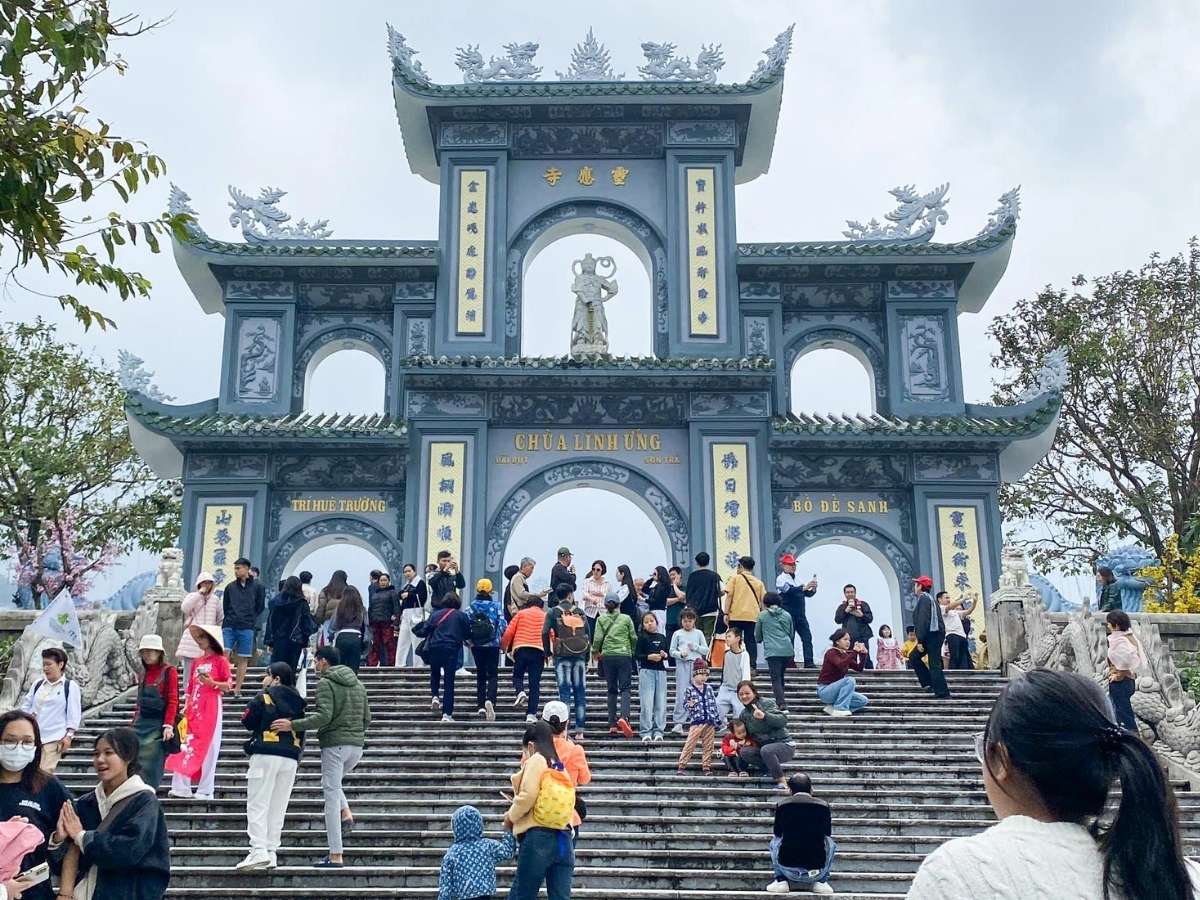
When taking photos, maintain a distance, showing respect for the sacred space. (Source: Thanh Nien Newspaper)
Linh Ung Son Tra Pagoda is not only a pilgrimage site with the majestic 67m Quan The Am statue but also a place to find peace amidst the scenery of mountains, forests, and the sea. The journey to explore the pagoda brings moments of meditation, helping each person temporarily leave the hustle and bustle of city life, immersing themselves in the fresh landscape and the unique spiritual culture of Da Nang.